Environmental Documentaries
“The Earth Is What We All Have In Common.” –Wendell Barry
"A human being is part of the whole, called by us "Universe," a part limited in time and space. He experiences himself, his thoughts and feelings as something separated from the rest - a kind of optical delusion of his consciousness. This delusion is a kind of prison for us, restricting us to our personal desires and to affection for a few persons nearest to us. Our task must be to free ourselves from this prison by widening our circle of compassion to embrace all living creatures and the whole [of] nature in its beauty." –Albert Einstein
Global Warming or Global Governance?

Watch Now!
1 Hour and 20 Minutes"They have not established that greenhouse gases are warming the earth. The IPCC is a political organization set up by the United Nations to provide evidence to support the framework convention on climate change, which has been signed by governments; it is entirely political."
Please Visit The Official Website:
http://www.globalwarmingglobalgovernance.com
Another World is Possible

Watch Now!
49 MinutesAbout the film

Watch Now!
48 MinutesAbout the film

Watch Now!
52 MinutesAbout the film

Watch Now!
25 MinutesAbout the film

Watch Now!
15 MinAbout the film

Watch Now!
1 Hour and 7 MinutesAbout the film
Our Beautiful World

Watch Now!
11 part seriesAbout the film

Watch Now!
6 part seriesAbout the film

Watch Now!
6 part seriesAbout the film

Watch Now!
14 part seriesAbout the film

Watch Now!
1 HourAbout the film

Watch Now!
6 part seriesAbout the film
Addicted to Plastic
Directed by Ian Connacher
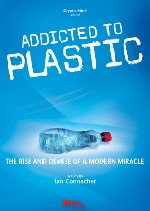
"The Roman Empire may have been defeated by lead in their water pipes and I learned that we too might be risking future generations with the cheapest, strongest, most ubiquitous material ever invented. Plastic might be quietly poisoning us."
ADDICTED TO PLASTIC is a feature-length documentary about solutions to plastic pollution. The point-of-view style documentary encompasses three years of filming in 12 countries on 5 continents, including two trips to the middle of the Pacific Ocean where plastic debris accumulates. The film details plastic's path over the last 100 years and provides a wealth of expert interviews on practical and cutting edge solutions to recycling, toxicity and biodegradability. These solutions - which include plastic made from plants - will provide viewers with a hopeful perspective about our future with plastic. (Excerpt from main website)
Please visit the official website for more information:
http://www.crypticmoth.com
Aerosol Crimes (aka Chemtrails)
Directed by Clifford Carnicom
"Contrails can and should form readily in clean, cold, and dry air. Normal clouds, on the other hand, require higher moisture levels and a particulate, or aerosol base, from which to develop. The radical transformation of our sky is a direct result of aircraft activity, now forces us to address an entirely new set of conditions. Aircraft are now repeatedly dispersing materials into the upper atmosphere at flight altitude, roughly from 35,000 to 40,000 feet. These materials expand rather than evaporate and they usually transform into an unsightful haze that over the recent years has decreased our general visibility down to ground levels. One of the remarkable facts is that this commonly now occurs at various low levels of relative humidity, on the order of 30 to 40 percent, instead of the 70 percent or greater that is associated with cloud formation. And so we know now that these are not clouds in any conventional sense, they are indeed a unique and artificial creation that now crosses new thresholds in the atmospheric and geophysical sciences."
This documentary produced by chemtrail researcher Clifford Carnicom is a must see and an excellent research tool. Five plus years into the operations has provided ample evidence in this 90min DVD that covers many topics. Over the years aerosol/chemtrail research has provided some leads but even more questions as to who and why the spraying occurs. It is clear jets are deliberately spraying the sky's and it will not stop until enough people are aware and willing to stand up for the operations exposure and termination. (Excerpt from video.google.com)
Please visit the official website for more information:
http://www.carnicom.com
Anthrax War
Directed by Bob Coen
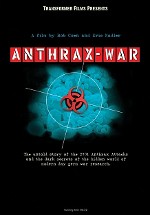
"One week before 9/11, a Pulitzer prize winning, Judith Miller, and two New York Times colleagues broke a front page story revealing the U.S. had been weaponizing anthrax as part of several secret programs."
Anthrax War is a ground-breaking feature length documentary which illuminates one of the most important stories of our age – the threat that a terrifying Germ War Arms Race may now be beginning around the globe…
Just weeks after 9/11, the United States was confronted with the frightening reality of biological terrorism. Anthrax-laced letters sent to government and media offices in Washington and New York spread fear and panic around the world. Millions were put at risk, scores were infected and five people died. For the first time in modern history, the United States Congress was shut down. Our collective nightmare of germ warfare – the attack of invisible, deadly bugs – had come to life…
Anthrax War takes viewers into the Bio-defense labs of the United States and the U.S. Military’s testing grounds in the deserts of the American southwest. The filmmakers travel to a top-secret military installation of the former Soviet Union where anthrax escaped thirty years ago, where civilians are still living with the consequences, and where biological weapons work may be continuing. They move on to the savannas of southern Africa, where they meet “Doctor Death” and his associates of the notorious Project Coast who experimented with anthrax and other designer germs during the Apartheid Era. And where the anthrax used in the 2001 attacks may have originated.
As they travel to the world’s bio-war ‘hot zones’, the filmmakers encounter people confronting the new threat of germ warfare today – investigators, politicians, and journalists probing this nightmare world as well as scientists, legislators and citizen activists working to warn the world that biological arms proliferation will prove catastrophic. Anthrax War is a wake-up call about what’s happening NOW… (Excerpt from main website)
Please visit site the official website for more information:
http://www.anthraxwar.com
As We Sow
Directed by Jan Weber
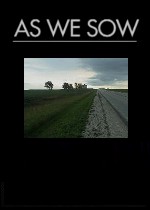
"I’m the end. There will be no more farmers in this family. I didn’t want to, but I encouraged my son—don’t farm. Don’t bust your ass for 26 years and end up worse than what you were when you started. It ain’t worth it." –Chris Petersen, Former Hog Farmer.
AS WE SOW opens on the desolate winter landscape of the central Iowa plains, and from the very first moments we know something is wrong. Farmhouses sit deserted in the middle of fields planted fencepost-to-fencepost with alternating acres of soybeans and corn; barnyards, where we expect to find chickens, hogs and cows - the staples of the "family farm" - are empty. Animals are inside now, confined in sleek computer-controlled industrial buildings that render the old red barn and the farmer obsolete.
AS WE SOW documents the stories of survival and failure in the real heartland, a struggle pitting family against family, neighbor against neighbor, citizens against their government, and small, independent farmers against the giants of global agribusiness. At the center is the land itself: who will control it and how, and at what cost to people and communities, to animals and the environment, and, ultimately to our democracy.
AS WE SOW is based on over 100 hours of location shooting and taped interviews with hog farmers and grain farmers, independent farmers and contract farmers; CEOs and large-scale livestock producers; grassroots activists, rural advocates, and environmentalists; town clerks and mayors; legislators and lobbyists; rural anthropologists, sociologists, economists, and educators. Through their voices, the documentary bears witness to the changes occurring across rural America and the powerful forces behind the dramatic and rapid transformation of the family farm to the factory farm. (Excerpt from main website)
Please visit the official website for more information:
http://aswesow.com
Big Ideas for a Small Planet: Power
Produced by Tania Mckeown
"We need to irradicate the term "alternative energy" from our vocabulary. There's nothing alternative about these technologies anymore. "
Addressing some of the most important issues facing humanity, this original documentary series from Sundance Channel focuses on environmental topics with interviews with forward-thinking designers and features on green products and alternative ideas that may transform our everyday lives. (Excerpt from main website)
Please visit the official website for more information:
http://www.sundancechannel.com
Dispatches: Binwars
Produced and Directed by Edward Jarvis & Joanna Burce

"Rubbish rage has hit Britain as people discover their weekly bin collections have been cut back to forth nightly. Bin wars are set to escalate. The latest weapon: pay as you throw announced by the government today. Every time you put out your bin, you pay to have your rubbish collected."
Dispatches investigates whether the nation's anger over fortnightly collections is justified, examining why the changes have been brought about and why they have resulted in a level of protest reminiscent of the petrol crisis of 2001.
Is the reduction in service necessary to improve our recycling rates as the government has claimed? Or are we facing a new threat to our health with mounting piles of rotting rubbish?
Using scientific analysis, this film provides hard facts about the bacteria breeding in our bins and investigates whether fortnightly collections are impacting on vermin populations.
Dispatches travels across the country to meet residents who are so incensed by the reduction in collections and the policing of their rubbish disposal that they are staging a variety of protests, including refusing to pay their council tax.
The film will examine the wider issues surrounding the disposal of rubbish including what happens to recyclable waste recycling rates in the UK and the reliance on landfill sites to deal with our domestic rubbish. (Excerpt from main website)
Please visit the official website for more information:
http://www.channel4.com
Blue Gold: World Water Wars
Directed by Sam Bozzo
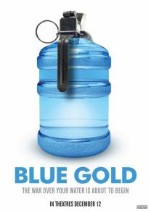
"This is not a film about saving the environment; it's a film about saving ourselves. Because whatever one's environmental, political, or religious opinions; whatever one's race, sex, or economic standing; whomever of us goes without water for a week cries blood."
In every corner of the globe, we are polluting, diverting, pumping, and wasting our limited supply of fresh water at an expediential level as population and technology grows. The rampant overdevelopment of agriculture, housing and industry increase the demands for fresh water well beyond the finite supply, resulting in the desertification of the earth.
Corporate giants force developing countries to privatize their water supply for profit. Wall Street investors target desalination and mass bulk water export schemes. Corrupt governments use water for economic and political gain. Military control of water emerges and a new geo-political map and power structure forms, setting the stage for world water wars.
We follow numerous worldwide examples of people fighting for their basic right to water, from court cases to violent revolutions to U.N. conventions to revised constitutions to local protests at grade schools. As Maude Barlow proclaims, "This is our revolution, this is our war". A line is crossed as water becomes a commodity. Will we survive? (Excerpt from main website)
Please visit the official website for more information:
http://www.bluegold-worldwaterwars.com
Blue Planet (8-part series)
Narrated by David Attenborough

"Our planet is a blue planet: over seventy percent of it is covered by the sea. The Pacific Ocean alone covers half the globe. You can fly across it non-stop for twelve hours and still see nothing more than a speck of land. This series will reveal the complete natural history of our ocean planet, from its familiar shores to the mysteries of its deepest seas."
BLUE PLANET is the definitive natural history of the world's oceans, covering everything from the exotic spectacle of the coral reefs to the mysterious black depths of the ocean floor. With revealing interviews with the scientists and production team, Discovery Channel takes viewers on an epic journey that will profoundly change how we view our planet’s oceans forever. Blue Planet: Seas of Life is the result of a six-year collaboration between Discovery Channel and the British Broadcasting Corporation.
The Deep
A place of mountain ranges, perpetual night and cold, pressure extremes and the strangest life forms on our planet, the deepest depths of the world’s oceans are worlds rarely seen. Because of the difficulty to reach and explore these depths, much of the life residing there remains a mystery. Now, through the use of advanced technology, creatures that would seem to appear only in our imaginations are revealed in a dazzling array. The Deep explores the darkest depths of our oceans and is a true voyage into the mysterious unknown.
Open Oceans
Open Oceans reveals an endless blue expanse of a water, where the nearest land mass is more than 300 miles (500 kilometers) away. In this liquid desert, it seems impossible anything could survive, but many do. The Blue Planet team reveals massive communities and lone drifters who call this open expanse home, and explores the rarely seen interdependent ecosystems necessary for life in the open oceans.
Coral Seas
Bathed in warm, clear tropical water and brilliant sunlight, coral reefs are the rain forests of the sea. Surrounded by desertlike expanses of ocean, they are rich oases of life. Spectacular numbers make it necessary to stand out to survive. This competition is highly visible as brightly colored fish compete for food, territory and mates. Watch these daily dramas unfold in stunning detail.
Polar Seas
Life on the edge of a frozen sea is tough. Pack ice at both poles is constantly on the move, and in winter freezes solid with air temperatures 158 degrees Fahrenheit (70 degrees Celsius) below freezing. Only in spring, with the retreating ice and waxing light reaching the water, does life begin again. Plankton blooms and feeds vast hordes of migrating fish, birds, whales, seals and polar bears. Walruses rake the seabed for clams. Minke and humpback whales gorge themselves on gigantic swarms of krill. But it is a brief indulgence, for the ice soon returns and pushes life back into the ocean. (Excerpt from main website)
Please visit site the official website for more information:
http://dsc.discovery.com
California Dreaming
Directed by Bregtje van der Haak

"I think the system has made us believe that we are powerless, that we are just at the mercy of the system, but we're not 'cause the system can only exist with us buying into the system, and if we don't and we start creating our own reality, then the system can no longer exist that way." -Laura Burkhalter, urban farmer
California is a strong brand, the state of new beginnings, dreams and movie stars, of surfers and a wonderful climate. But the Golden State is bankrupt and the city of Los Angeles is running out of cash. Public services are being cut and unemployment keeps rising. At the same time, optimism, entrepreneurship and the belief in the power of America are stronger than ever.
In Los Angeles, we meet five people who are going through a transformation in their lives during this crisis. Justin and Christine lost their jobs and are now living in a van with their two young sons. Charles has gotten out of prison after fourteen years. Mizuko prepares her children for the future by making them at ease in virtual reality. Laura has taken advantage of the crisis by buying land cheaply and starting an urban farm and artists collective Fallen Fruit maps the abundant free 'public fruit' available in the city. Who are the pioneers who are reinventing the new America and how do they see the future? (Excerpt from website)
Please visit the official website for more information:
http://tegenlicht.vpro.nl/dossiers
Chernobyl Heart
Directed by Maryann DeLeo
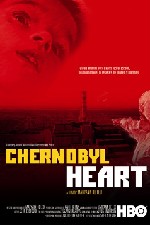
"It's noticeable that the number of illnesses increased after Chernobyl. Children get sick more often after they're born. Their immune system is weakened."
On April 26, 1986, the worst nuclear accident in history occurred when a reactor exploded at the Chernobyl nuclear power plant in Ukraine, releasing 90 times the radioactivity of the atomic bombs dropped on Hiroshima and Nagasaki. Sixteen years later, award-winning filmmaker Maryann De Leo took her camera to ground zero, following the devastating trail radiation leaves behind in hospitals, orphanages, mental asylums and evacuated villages. The Academy Award®-winning documentary short debuts immediately after the America Undercover special "Indian Point: Imagining the Unimaginable".
Following Adi Roche, founder of Ireland's Chernobyl Children's Project, CHERNOBYL HEART opens in the exclusion zone, the most radioactive environment on earth. From there, Roche travels to Belarus, home to many of the children she seeks to aid. The film reveals those hardest hit by radiation, including thyroid cancer patients and children suffering from unfathomable congenital birth and heart defects. (Excerpt from main website)
Please visit the official website for more information:
http://www.hbo.com
Natural World: Clever Monkeys
Directed by Mark Fletcher
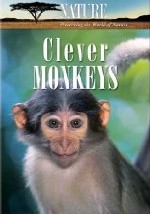
"We are increasingly realizing that we are not the only intelligent life on the planet. 40 million years ago, it seemed there were creatures with hands and eyes who took great care of their babies because they took a long time to grow up. The story has ended up with us seeing ourselves in their faces. We can be proud of the fact that what makes us human isn't just human after all."
David Attenborough's entertaining romp through the world of monkeys has a serious side: for when we look at monkeys we can see ourselves. From memory to morality, from 'crying wolf' to politics, monkeys are our basic blueprint.
Pygmy marmosets 'farm' tree sap; bearded capuchins in Brazil develop a production line for extracting palm nuts; white-faced capuchins in Costa Rica tenderly nurse the victims of battle; and in the Ethiopian highlands a deposed gelada baboon has got the blues. (Excerpt from main website)
Please visit the official website for more information:
http://www.bbc.co.uk
The Coconut Revolution
Directed by Dom Rotheroe
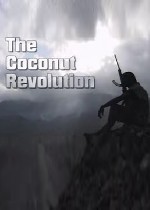
"My fighting on Bougainville is based on these factors. One, we are fighting for man and his culture and two, land and environment. And the third one is independence."
This is the modern-day story of a native peoples remarkable victory over Western Colonial power. A Pacific island rose up in arms against giant mining corporation Rio Tinto Zinc (RTZ) - and won despite a military occupation and blockade. When RTZ decided to step up production at the Panguna Mine on the island of Bougainville, they got more than they bargained for. The islands people had enough of seeing their environment ruined and being treated as pawns by RTZ.
RTZ refused to compensate them, so the people decided it was time to put an end to outside interference in the islands affairs. To do this they forcibly closed down the mine.
The Papua New Guinea Army (PNGDF) were mobilised in an attempt to put down the rebellion. The newly formed Bougainville Revolutionary Army (BRA) began the fight with bows & arrows and sticks & stones. Against a heavily armed adversary they still managed to retain control of most of their island. Realising they were beaten on the ground, the PNGDF imposed a gunboat blockade around Bougainville, in an attempt to strangle the BRA into submission. But the blockade seemed to have little or no effect.
With no shipments getting in or out of the island, how did new electricity networks spring up in BRA held territory? How were BRA troops able to drive around the island without any source of petrol or diesel?
What was happening within the blockade was an environmental and spiritual revolution. The ruins of the old Panguna mine were being recycled... to supply the raw materials for the worlds first eco-revolution.
A David and Goliath story of the 21st century, The Coconut Revolution will appeal to people of all backgrounds. (Excerpt from main website)
Please visit the official website for more information:
http://www.cultureshop.org
The Corporation
Produced by Mark Achbar & Jennifer Abbott
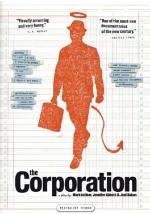
"One of the questions that comes up periodically is to what extent could a corporation be considered to be psychopathic. And if we look at a corporation as a legal person, that it may not be that difficult to actually draw the transition between psychopathy in the individual to psychopathy in the corporation." –Dr. Robert Hare
Provoking, witty, stylish and sweepingly informative, THE CORPORATION explores the nature and spectacular rise of the dominant institution of our time. Part film and part movement, The Corporation is transforming audiences and dazzling critics with its insightful and compelling analysis. Taking its status as a legal "person" to the logical conclusion, the film puts the corporation on the psychiatrist's couch to ask "What kind of person is it?" The Corporation includes interviews with 40 corporate insiders and critics - including Noam Chomsky, Naomi Klein, Milton Friedman, Howard Zinn, Vandana Shiva and Michael Moore - plus true confessions, case studies and strategies for change. (Excerpt from main website)
Please visit the official website for more information:
http://www.thecorporation.com
The Cost of a Coke
Directed by Matt Beard
"Coca Cola, we've found out, has actually been cooperating with paramilitaries in Colombia to execute workers in their own bottling plants that are trying to form unions and trying to demand better working conditions. So we've been able to bring this to the attention of Universities and say 'if Coca Cola doesn't stop doing this and if Coca Cola doesn't adopt different practices, then our University is no longer willing to have anything to do with Coca Cola."
In the world of the Coca-Cola Company, whenever there's a union there's always a bust, whenever there's corruption there's always the real thing, yeah!! Justice Productions second release, THE COST OF A COKE: 2ND EDITION is the updated version to Matt Beard's first documentary, THE COST OF A COKE.
THE COST OF A COKE: 2ND EDITION explores the corruption and moral bankruptcy of the world's most popular soda, and what you can do to help end a gruesome cycle of murders and environmental degradation.(Excerpt from main website)
Please visit the official website for more information:
http://www.battleforjustice.com
A Cow At My Table
Directed by Jennifer Abbott
"The language that's used describes the animal strictly in terms of its profitability or as a living machine. For example, hens...female chickens that produce eggs, the industrial term is 'layers'. In the dairy industry they describe cows, especially high producing cows, as 'milkers'. They're not seen as animals; they're seen as a productive machine and described as such."
A Cow at My Table explores Western attitudes towards farm animals and meat, and the intense battle between animal advocates and the meat industry to influence the consumer's mind. Five years in production took Director Jennifer Abbott across Canada, the US, Australia and New Zealand to meet with the leaders of the animal rights movement, animal welfare advocates as well as spokespeople from livestock industries. A Cow at My Table intercuts these diverse perspectives with archival films, images from modern-day agribusiness and footage of farm animals shot from uncharacteristic vantage points. The result, say critics and programmers, is a documentary that is "brilliant," "visually smart," "extremely accomplished" and "extraordinarily compelling and powerful." In the words of Toronto's NOW Magazine film critic Cameron Bailey, "Like all the best documentaries, this film offers more questions than answers." (Excerpt from website)
Please visit the official website for more information:
http://www.goodknights.org
The Disappearing Male
Directed by Marc De Guerre
"We are conducting a vast toxicological experiment in which our children and our children's children are the experimental subjects." –Dr. Herbert Needleman
The Disappearing Male is about one of the most important, and least publicized, issues facing the human species: the toxic threat to the male reproductive system.
The last few decades have seen steady and dramatic increases in the incidence of boys and young men suffering from genital deformities, low sperm count, sperm abnormalities and testicular cancer.
At the same time, boys are now far more at risk of suffering from ADHD, autism, Tourette's syndrome, cerebral palsy, and dyslexia.
The Disappearing Male takes a close and disturbing look at what many doctors and researchers now suspect are responsible for many of these problems: a class of common chemicals that are ubiquitous in our world.
Found in everything from shampoo, sunglasses, meat and dairy products, carpet, cosmetics and baby bottles, they are called "hormone mimicking" or "endocrine disrupting" chemicals and they may be starting to damage the most basic building blocks of human development. (Excerpt from main website)
Please visit the official website for more information:
http://www.cbc.ca
The Doctor, the Depleted Uranium, and the Dying Children
Directed by Freider Wagner
"Uranium shells contain depleted uranium, a byproduct of nuclear power production. Nuclear waste is radioactive. It has to be stored in special containers and it needs to be guarded and that cost money; a great deal of money when there is hundreds of thousands of tons to dispose of. So the nuclear industry was delighted when the industry showed interested in its cheap uranium byproduct."
An award winning documentary film produced for German television by Freider Wagner and Valentin Thurn. The film exposes the use and impact of radioactive weapons during the current war against Iraq. The story is told by citizens of many nations. It opens with comments by two British veterans, Kenny Duncan and Jenny Moore, describing their exposure to radioactive, so-called depleted uranium (DU), weapons and the congenital abnormalities of their children. Dr. Siegwart-Horst Gunther, a former colleague of Albert Schweitzer, and Tedd Weyman of the Uranium Medical Research Center (UMRC) traveled to Iraq, from Germany and Canada respectively, to assess uranium contamination in Iraq. (Excerpt from website)
Please visit the official website for more information:
http://ochoa-wagner.kulturserver-nrw.de
Don't Swallow Your Toothpaste
Directed by Lisa Harney

"Half the fluoride taken in by the body is excreted, but the other half stays and builds up in the bones."
We all want the best for our children, including sparking white teeth. Children today have fewer fillings than ever before, but what is the truth behind this great success story? Better care of our teeth or the magic ingredient in our toothpaste fluoride?
Some parts of Britain like Birmingham already add fluoride to the water and there are now plans to extend this to other cities: Liverpool, Manchester, Glasgow, and London. But fluoride is a poison. It may work in small quantities, but people are worried that there is just too much of it around.
Dental health has been transformed, especially among poorer people. Before fluoride, toothpaste decay was rampant. Yet, dental health has also improved dramatically in countries which do not add fluoride to their water. Britain’s fluoride is imported from Holland, where ironically, fluoridation has been banned. (Excerpt from film)
Doomsday Called Off
Directed by CBC

"Once all of these satellites were strung together, we could then look at the temperature change overtime, and the strange thing we found is that there is very little change in the global temperature. And this was a surprise because the surface temperature showed an increase, but this bulk of the atmosphere, the real climate system was not. And that then caused us to realize that the human effects of climate are likely not happening the way we think they are."
In this eye-opening documentary viewers will discover how the most respected researchers from all over the world explode the doom and gloom of global warming. Humans stand accused of having set off a global climate catastrophe by increasing the amount of carbon dioxide in the atmosphere.
The prophecy of doom is clear and media pass on the message uncritically. Now serious criticism has arisen from a number of heavyweight independent scientists. They argue that most of the climatic change we have seen is due to natural variations. They also state that if CO2 is to play a role at all -it will be minuscule and not catastrophic! This story presents a series of unbiased scientists as our witnesses. We will hear their eloquent criticism of the IPCC conclusions illustrated by coverage of their research work. (Excerpt from main website)
Please visit the official website for more information:
http://www.cbc.ca
Earthlings
Directed by Shaun Monson

"Since we all inhabit the Earth, all of us are considered earthlings. There is no sexism, no racism, or speciesism in the term earthling. It encompasses each and every one of us, warm or cold-blooded, mammal, vertebrae or invertebrate, bird, reptile, amphibian, fish, and human alike. Humans, therefore, being not the only species on this planet, share this world with millions of other living creatures as we all evolved here together."
EARTHLINGS is a feature length documentary about humanity's absolute dependence on animals (for pets, food, clothing, entertainment, and scientific research) but also illustrates our complete disrespect for these so-called "non-human providers." The film is narrated by Academy Award nominee Joaquin Phoenix (GLADIATOR) and features music by the critically acclaimed platinum artist Moby.
With an in-depth study into pet stores, puppy mills and animals shelters, as well as factory farms, the leather and fur trades, sports and entertainment industries, and finally the medical and scientific profession, EARTHLINGS uses hidden cameras and never before seen footage to chronicle the day-to-day practices of some of the largest industries in the world, all of which rely entirely on animals for profit. Powerful, informative and thought-provoking, EARTHLINGS is by far the most comprehensive documentary ever produced on the correlation between nature, animals, and human economic interests. There are many worthy animal rights films available, but this one transcends the setting. EARTHLINGS cries to be seen. Highly recommended! (Excerpt from video.google.com)
Please visit the official website for more information:
http://www.isawearthlings.com
The Emotional World of Farm Animals
Directe by Stanley M. Minasian

"They are the animals we use for meat yet seldom get to meet."
The Emotional World of Farm Animals is a delightful documentary for viewers of all ages about the thinking and feeling side of animals that are all too often just viewed as food.
Jefferey Masson, author of When Elephants Weep and Dogs Never Lie About Love, leads viewers through the personal journey he underwent while writing his latest book, The Pig Who Sang to The Moon. This journey into the sentient, emotional lives of farm animals brings Masson to animal sanctuaries around the country where caregivers and the animals themselves tell their harrowing stories of rescue and escape . Masson delves into the rich ancestry of these curious and intelligent animals and interviews top experts in animal behavior who offer scientific perspectives on these amazing creatures. (Excerpt from main website)
Please visit the official website for more information:
http://www.animalplace.org
The End of Suburbia
Directed by Gregory Greene

"The whole suburban project, I think can be summarized pretty succinctly as the greatest misallocation of resources in the history of the world. America took all of its post-war wealth and invested it in a living arrangement that has no future."
The End of Suburbia: Oil Depletion and the Collapse of The American Dream is a 2004 documentary film concerning peak oil and its implications on the suburban lifestyle. This film is critical of widespread use of "cheap energy" policies especially in the transportation sector and argues that technological fixes such as biofuels and hydrogen are unfeasible. According to the film, a major reorganization of urban land use is needed to decrease transportation; also, some aspects of the global economy will have to be rolled back, such as long-distance shipping of food. Further, this film claims people and organizations will enter a counter-productive and damaging period of denial as the economy restructures to lower energy use. (Excerpt from Wikipedia)
Please visit the official website for more information:
http://www.endofsuburbia.com
Ethos
Directed by Pete McGrain

"The media marketing men spend billions of dollars in research. They have developed an entire science based on the very best psychology. They know exactly which one of our buttons to press to make us swallow an idea or buy a product, and they're not just selling us laundry detergent, they sell us everything from plastic gadgets to warfare. If we are to make decisions about the future of our society, the single most important thing we need is the truth." -Woody Harrelson
Hosted by twice Oscar nominated actor and activist Woody Harrelson, Ethos lifts the lid on a Pandora's box of systemic issues that guarantee failure in almost every aspect of our lives; from the environment to democracy and our own personal liberty: From terrifying conflicts of interests in politics to unregulated corporate power, to a media in the hands of massive conglomerates, and a military industrial complex that virtually owns our representatives. With interviews from some of todays leading thinkers and source material from the finest documentary film makers of our times Ethos examines and unravels these complex relationships, and offers a solution, a simple but powerful way for you to change this system! (Excerpt from main website)
Please visit the official website for more information:
http://www.ethosthemovie.com
Natural World: A Farm for the Future
Directed by Tim Green & Rebecca Hosking

"An approaching energy crisis would likely force a revolution in farming and change the British country side forever. It will effect what we eat, where it comes from, and even the alarming question of whether they'll be enough food to keep us fed. If our farm is to survive, it will have to change." –Rebecca Hosking
Wildlife film maker Rebecca Hosking investigates how to transform her family's farm in Devon into a low energy farm for the future, and discovers that nature holds the key.
With her father close to retirement, Rebecca returns to her family's wildlife-friendly farm in Devon, to become the next generation to farm the land. But last year's high fuel prices were a wake-up call for Rebecca. Realising that all food production in the UK is completely dependent on abundant cheap fossil fuel, particularly oil, she sets out to discover just how secure this oil supply is.
Alarmed by the answers, she explores ways of farming without using fossil fuel. With the help of pioneering farmers and growers, Rebecca learns that it is actually nature that holds the key to farming in a low-energy future. (Excerpt from main website)
Please visit the official website for more information:
http://www.bbc.co.uk
Flotsam Found
Directed by Bruce Gowers
"Every seabird on the planet has plastic in its stomach. Every sea turtle that has been autopsied has plastic in its stomach. It’s everywhere now." –Curtis Ebbesmeyer, Oceanographer
Our oceans sure look pretty from afar, but if you take a closer look, you'll find plenty of gross stuff lurking around. There are as many as 46,000 pieces of plastic floating in each square mile of ocean, threatening the health of our seas, especially the marine wildlife inhabiting them. But there is at least one good thing scientists can get from all this junk: a better understanding of the behavior of complicated ocean currents, which are shaped by a number of disparate forces and affect, among other things, the climate and the distribution of Earth's life forms. By studying the movement of ocean flotsam—in particular, the movement of 29,000 bathtub toys that were lost from a cargo ship in 1992—retired oceanographer Curtis Ebbesmeyer has uncovered quite a bit about our ocean's currents and the places they carry litter. (Excerpt from main website)
Please visit the official website for more information:
http://www.pbs.org
Flow - For Love of Water
Directed by Irena Salina

"Thousands have lived without love, not one without water." –W.H.Auden
Irena Salina's award-winning documentary investigation into what experts label the most important political and environmental issue of the 21st Century - The World Water Crisis.
Salina builds a case against the growing privatization of the world's dwindling fresh water supply with an unflinching focus on politics, pollution, human rights, and the emergence of a domineering world water cartel.
Interviews with scientists and activists intelligently reveal the rapidly building crisis, at both the global and human scale, and the film introduces many of the governmental and corporate culprits behind the water grab, while begging the question "CAN ANYONE REALLY OWN WATER?"
Beyond identifying the problem, FLOW also gives viewers a look at the people and institutions providing practical solutions to the water crisis and those developing new technologies, which are fast becoming blueprints for a successful global and economic turnaround. (Excerpt from main website)
Please visit the official website for more information:
http://www.flowthefilm.com
The Fluoride Deception
Directed by Christopher Bryson
"Fluoride science is corporate science. Fluouride science is DDT sicence. It's asbestos science. It's tobacco science. It's a racket."
Hailed as a harmless chemical that would prevent tooth decay, new evidence shows how fluoride could be linked to serious health problems.
Fluoridation was first advanced in the US at the end of the second World War. Proponents argued that fluoride in water and toothpaste would help to protect teeth and prevent decay. Over the following decades, fluoride was added to public water supplies across the country.
While the benefits of fluoridation have been held to be unquestionable, accumulating evidence points to a frightening prospect: that fluoride may have serious adverse health effects, including infant mortality, congenital defects and IQ.
Now a new book, titled "The Fluoride Deception" by Christopher Bryson examines the background of the fluoridation debate. According to Bryson, research challenging fluoride's safety was either suppressed or not conducted in the first place. He says fluoridation is a triumph not of medical science but of US government spin. (Excerpt from website)
Please visit the official website for more information:
http://fluorideaction.net
Food, Inc.
Directed by Robert Kenner
"There is a deliberate veil, this curtain, that's dropped between us and where our food is coming from. The industry doesn't want you to know the truth about what you are eating because if you knew, you might not want to eat it."
In Food, Inc., filmmaker Robert Kenner lifts the veil on our nation's food industry, exposing the highly mechanized underbelly that has been hidden from the American consumer with the consent of our government's regulatory agencies, USDA and FDA. Our nation's food supply is now controlled by a handful of corporations that often put profit ahead of consumer health, the livelihood of the American farmer, the safety of workers and our own environment. We have bigger-breasted chickens, the perfect pork chop, herbicide-resistant soybean seeds, even tomatoes that won't go bad, but we also have new strains of E. coli—the harmful bacteria that causes illness for an estimated 73,000 Americans annually. We are riddled with widespread obesity, particularly among children, and an epidemic level of diabetes among adults.
Featuring interviews with such experts as Eric Schlosser (Fast Food Nation), Michael Pollan (The Omnivore's Dilemma, In Defense of Food: An Eater's Manifesto) along with forward thinking social entrepreneurs like Stonyfield's Gary Hirshberg and Polyface Farms' Joel Salatin, Food, Inc. reveals surprising—and often shocking truths—about what we eat, how it's produced, who we have become as a nation and where we are going from here. (Excerpt from main website)
Please visit the official website for more information:
http://www.foodincmovie.com
Forest Gardening with Robert Hart
Produced by Malcolm Baldwln
"Mahatma Ghandi has been the enduring inspiration for this vibrant greenery. His vision of a world order based on democratic de-organized self sustaining small communities - he's the guiding principal of Robert's work, but other influences are to be found amongst the trees which have both practical and spiritual significance."
Inspired by the urge to create a practical solution to world hunger whilst caring for his handicap brother, Robert has carved out a haven of tranquility and abundance. His vision was to plant a miniature edible forest which could fulfill the needs of a healthy diet and beautiful surroundings. Some thirty years later, this mature garden in Welsh Border country now serves as a model of what can be achieved in any backyard. Success depends on the understanding that useful plants can be grown in succession of layers that imitate nature. (Excerpt from film)
Please visit website for more information:
http://www.spiralseed.co.uk/forestgarden
Free Energy: The Race To Zero Point
Produced and Directed by Christopher Toussaint

"Electric power is everywhere present in unlimited quantities. It can drive the world's machinery without the need of coal, oil, gas, or any other fuels... This new power...would be derived from the energy which operates the Universe..the cosmic energy." –Nikola Tesla
We live in a vast sea of energy. Everything, every atom, every subatomic particle is in constant motion, spinning eternally. Even in the cold, dark absolute vacuum of empty space, there exists what new physics is calling the quantum vacuum flux; it is the ether of the ancients, the life force energy of metaphysics; are the random fluctuations of this vast field of potential in which space and time are embedded. Now theoretically and mathematically proven, the question no longer is: “does this zero point energy exist?” but rather, can we tap this inexhaustible resource of free and unlimited energy and manifest new technologies which are both inexpensive and environmentally safe.
One thing is certain, if we continue on the course of rapidly burning fossil fuels and relying on nuclear fission, the future of our civilization is in grave jeopardy. We’re at a critical juncture where the ravages of industrial pollution and radioactive waste have exceeded the carrying capacity of mother earth. Our finite reserves of oil and gas will be completely exhausted by the year 2025 at the present rate of consumption. Large corporate and governmental self interests ignore this pending crisis and resist change to the status quo. The question must be asked: “Is this the kind of world we want to pass down to future generations?” (Excerpt from film)
Please visit site for more information:
http://www.freespiritproductions.com
Future by Design
Directed by William Gazecki

"When you go on with a word like 'civilization', it sounds like something that was obtained. As long as you have war, police, prisons, crime, you're in the early stages of civlization, what they call 'civilization'."
Future by Design is a documentary film by Academy Award® nominated filmmaker William Gazecki, sharing the life and far-reaching vision of Jacque Fresco, a modern day Da Vinci. Peer to Einstein and Buckminster Fuller, Jacque is a self-taught futurist who describes himself most often as a multi-disciplinarian or “generalist” -- a student of many inter-related fields. He is a prolific inventor, having spent his entire life (he is now 90 years old) conceiving of and devising inventions on various scales which entail the use of innovative technology.
The film explores Fresco’s world of the future, where scientific method, not politics, rules world operations, and all human activities and efforts are directed towards achieving dynamic equilibrium between man and nature.
Future by Design is a visually and intellectually engaging exploration of one man’s vision of a future where war is outdated, there is no shortage of any necessary resource, and our focus as a species is sustainability. But far from presenting a vision of Utopia, this documentary demonstrates a “possible future” -- with real and viable alternatives to our current paradigm of militarism and commercialism. (Excerpt from main website)
Please visit the official website for more information:
http://www.futurebydesignthemovie.com
The Future of Food
Produced by Deborah Koons Garcia

"They allowed the patenting of one of the genes responsible for breast cancer. And many researchers who had been working on a cure for breast cancer were no longer allowed to use that gene in their research because another company had patented it and charged them very very high fees. Some of the major pharmaceutical companies have gone into university laboratories and sued those laboratories and sued researchers who were using the genes that they own. This is probably the largest private takings of what should be the commons that we all own in common that you could possibly imagine and I think one of the most disturbing economic trends of our times."
There is a revolution happening in the farm fields and on the dinner tables of America -- a revolution that is transforming the very nature of the food we eat.
THE FUTURE OF FOOD offers an in-depth investigation into the disturbing truth behind the unlabeled, patented, genetically engineered foods that have quietly filled U.S. grocery store shelves for the past decade.
From the prairies of Saskatchewan, Canada to the fields of Oaxaca, Mexico, this film gives a voice to farmers whose lives and livelihoods have been negatively impacted by this new technology. The health implications, government policies and push towards globalization are all part of the reason why many people are alarmed by the introduction of genetically altered crops into our food supply.
Shot on location in the U.S., Canada and Mexico, THE FUTURE OF FOOD examines the complex web of market and political forces that are changing what we eat as huge multinational corporations seek to control the world's food system. The film also explores alternatives to large-scale industrial agriculture, placing organic and sustainable agriculture as real solutions to the farm crisis today. (Excerpt from main website)
Please visit the official website for more information:
http://www.thefutureoffood.com
Gasland
Directed by Josh Fox
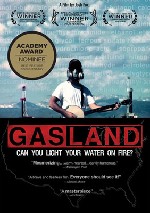
"Every environmental law we wrote to protect public health is ignored, but the neurological effects are very insidious. At first you may just have headaches. Then the next thing you might have: ringing in your ears, or you may be a little disoriented or you may feel a little dizzy, but eventually you may feel what is called peripheral neuropathy and when you get to this stage, you have irreversible brain damage." -Dr. Theo Colborn, Former US EPA Advisor
"The largest domestic natural gas drilling boom in history has swept across the United States. The Halliburton-developed drilling technology of "fracking" or hydraulic fracturing has unlocked a "Saudia Arabia of natural gas" just beneath us. But is fracking safe? When filmmaker Josh Fox is asked to lease his land for drilling, he embarks on a cross-country odyssey uncovering a trail of secrets, lies and contamination. A recently drilled nearby Pennsylvania town reports that residents are able to light their drinking water on fire. This is just one of the many absurd and astonishing revelations of a new country called GASLAND. Part verite travelogue, part expose, part mystery, part bluegrass banjo meltdown, part showdown."(Excerpt from main website)
Please visit the official website for more information:
http://www.gaslandthemovie.com
The Genetic Conspiracy: Following the Trail
Reported by Manfred Ladwig
"Monsanto only investigated a small fraction of the protein. Only the first 15 amino acids of the 455 the protein consists of were examined. The manufacturer cannot exclude allergy risks or even toxicities. I think it is likely that Monsanto wanted to hide possible changes and thus possible dangers." –Professor Masaharu Kawata, Molecular Biologist, University of Nagoya
We want to answer one question: Is genetic engineering really dangerous?
Step one: the advertising videos of the manufacturers. They claim genetic engineering produces higher yields, fights world hunger, and induces the need for pesticides.
But what actually is a genetically modified plant? Most plants are genetically modified in such a way as to make them capable of withstanding a large dose of herbicides. While the weeds on the field die, the genetically modified plant won't. (Excerpt from film)
Please visit the official website for more information:
http://www.perspektive-medien.de
Genetically Modified Food - Panacea or Poison
Produced By Global Science Productions

"The fact is, there has never been a single study on the human safety of these products. Any implication to the contrary is a pure fabrication. Make the corporate apologists produce a single study, and they can not. The important point is this. Among scientists, the scientific community is deeply divided as to whether these foods are safe or not, so the burden of proof is on industry. And so far, the corporations have failed to demonstrate the safety of these foods on humans through a single study." –John Hagelin, PhD
In the last thirty years global demand for food has doubled. In a race to feed the planet, scientists have discovered how to manipulate DNA, the blueprint of life, and produce what they claim are stronger, more disease-resistant crops. However, fears that Genetically Modified Food may not be safe for humans or the environment has sparked violent protest. Are we participating in a dangerous global nutritional experiment? This informative film helps the viewer decide if the production of genetically modified food is a panacea for world hunger or a global poison. (Excerpt from website)
Please visit the official website for more information:
http://www.oneheartbooks.com
Global Warming or Global Governance?
Produced by Sovereignty International Environmental Perspectives, Inc.
"They have not established that greenhouse gases are warming the earth. The IPCC is a political organization set up by the United Nations to provide evidence to support the framework convention on climate change, which has been signed by governments; it is entirely political."
Interviews of climate scientists and biologists from numerous sources who explain, step by step, why Al Gore and the global warming alarmists are incorrect. In some cases, blatantly so. It also provides evidence that the global warming agenda is being funded with tens of billions of dollars as a mechanism to create global governance. Hear from congressmen, experts and even well-known news broadcasters how global governance puts global institutions that are not accountable to the American people in control of every aspect of our economy. The U.S. government is very close to making this a reality. Very close. Every American, every citizen of the world, needs to hear the other side of the global warming story. (Excerpt from video.google.com)
Please visit the offical website for more information:
http://www.globalwarmingglobalgovernance.com
Dispatches: The Great Green Smokescreen
Produced and Directed by Mike Radford

"How many of the schemes that deal with our carbon footprint are just hot air."
Days after Live Earth partied for the planet, Dispatches reveals how attempts to buy our way out of climate crisis may not be delivering. Channel 4 News' Science Correspondent Tom Clarke dissects the many 'solutions' to global warming - from carbon off-setting to green energy tariffs.
Jetting off on holidays and mini-breaks - we're increasingly turning to off-setting to alleviate our environmental guilt. It's a boom industry, with dozens of new companies springing up each year to offset everything from weddings to babies' nappies.
The UK's biggest players have a collective turn-over in excess of £2m. And now big business is in on the act with Barclays, HSBC and Sky off-setting themselves and Dell and BP selling offsets to their customers.
But are offsets really the answer in the fight against global warming? Clarke investigates a number of projects - from tree-planting in the UK to pig manure in Mexico - all of which are supposed to cancel out our carbon footprint. But do these projects stand up to scrutiny?
So what else should consumers consider? Green energy tariffs look appealing, but research commissioned for Dispatches shows they often don't make a watt of difference. Carbon labelling is being talked up a storm, but scientists tell Dispatches that labelling may not be a credible reality for some time to come.
One way of making a difference, Clark discovers, might be to take direct personal action to lower our own carbon emissions. But given the small amount of savings each of us can make as individuals, is that any more than a token gesture? (Excerpt from main website)
Please visit the official website for more information:
http://www.channel4.com
Great Natural Wonders of the World
Produced by Peter Crawford
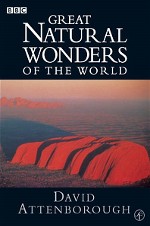
"The earth is indeed an extraordinary planet, and not just because of the almost infinitely variety of life that is supports, its very fabric - the land itself - is marvelously varied and impressive. In this program, we're going on a global journey in search of the greatest natural wonders of the world."
Long ago, the surface of the earth was born a fire. This was the raw material from which the face of our planet was created. Then over an immense length of time, the earth's crust was shaped and reshaped by the forces of nature. its rocks have been carved by the powers of the elements, and by that great leveler, time itself. What we see around us today is the result of these unrelenting processes of natural erosion, a dramatic story of continuous change. The world we see now is the result of monumental changes that are barely detectable in our own brief lives. (Excerpt from film)
Please visit the official website for more information:
http://shop.abc.net.au
Heavy Watergate: The War Against Cold Fusion
Directed by Christopher Toussaint

"What if we were to learn that there exists a new form of clean energy that exists in virtually unlimited supply? A renewable resource legitimized in hundreds of laboratory tests and peer reviewed scientific journals, but which is ignored by governments and censored by many prestigious publications."
On March 23, 1989, respected chemists, Dr. Stanley Pons and Dr. Martin Fleishman made an announcement that rocked the world of science. Their tabletop experiments with heavy water, a renewable resource readily available in ocean water, yielded enormous amounts of heat energy. Appropriately named, "Cold Fusion," this breakthrough challenged many basic scientific concepts. In response, a group of powerful physicists, heavily reliant upon government funding for their hot fusion research, leveled an unprecedented smear campaign against Pons, Fleishman and the entire field of Cold Fusion science. Was the discovery of Fire From Water too good to be true? Or was it the discovery of the millennium? (Excerpt from website)
Please visit site for more information:
http://www.epiphanypictures.com
Here Comes The Sun
Directed by Rob van Hattum
"It is very easy to show that all energy needs can be met by renewable energies. All energy needs. It's very simple to show it. To speak about limited potential is ridiculous. It has nothing to do with science, only with mythology."
If it were up to the sun, we would have no energy problem. Every half hour on the Earth's surface, there is more than enough light to provide energy needs for the whole world in a year. We don't have an energy problem, we have a conversion problem. If we are able to harvest sunlight in smart way, then we can prevent a global energy crisis.
That sounds nice but that does not mean it will succeed, at least that is what many different bodies want us to believe. It's too expensive, takes too much space, too much material, it costs more energy than it brings, and it is still not efficient enough. While all these doubts play a role for solar energy in the distant future, it is still a marginal player in the global energy game.
Back-light takes the edge off these myths and shows that a solar economy is much closer than we think. Next year, there are already rolling Giga Watts of solar cells on the conveyor belt. The industry has mastered the technology and the machines.
Radical German government measures have proved that it is possible. Villagers have completely installed solar power on empty lands. Power stations contribute to the network and where they are deserved. Many countries follow the German example: The Americans have their Grand Solar Plan and the French President Sarkozy is talking about a solar plan with the countries bordering the Mediterranean Sea. According to the Spanish electricity producers, oil companies will be left out. So what energy crisis? The sun is coming! (Excerpt from main website)
Please visit the official website for more information:
http://www.vpro.nl
Holes In Heaven? HAARP and Advances in Tesla Technology
Directed by Wendy Robbins

"The late Carl Sagan said 'We've arranged a global civilization in which most crucial elements profoundly depend on science and technology. We've also arranged things so that almost no one understands science or technology. We might get away with it for a while, but sooner or later, this combustible mixture of ignorance and power is going to blow up in our faces."
Are we making Holes in Heaven? HAARP (High Frequency Active Auroral Research Program) is a controversial high frequency radio transmitter, or "ioniospheric heater," which is believed to be descended from the works of Nikola Tesla and is operated by the U.S. Navy/Air Force and Phillip Laboratories in remote Gakona, Alaska.
Using HAARP, the military can focus a billion-watt pulsed radio beam into our upper atmosphere, ostensibly for ionospheric research. This procedure will form extremely low frequency waves and send them back to the Earth, enhancing communications with submarines and allowing us to "see" into the Earth, detecting anything from oil reserves to underground missile silos.
However, several researchers claim HAARP poses many dangers, including blowing thirty-mile holes in the Earth's upper atmosphere. They also warn of possible disruption of the subtle magnetic energies of our Earth and ourselves.
Holes in Heaven? is a prime example of grassroots filmmaking by producer Paula Randol-Smith and Emmy-winning director Wendy Robbins. Narrated by Martin Sheen, the film, investigates HAARP, its history and implications, and examines the dangers and benefits of high and low frequencies and of electromagnetic technology. (Excerpt from main website)
Please visit the official website for more information:
http://www.holesinheaven.com
HOME
Directed by Yann Arthus-Bertrand
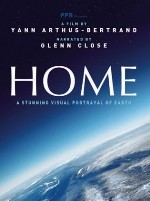
"The engine of life is linkage. Everything is linked. Nothing is self-sufficient...Sharing is everything."
In 200,000 years on Earth, humanity has upset the balance of the planet, established by nearly four billion years of evolution. The price to pay is high, but it's too late to be a pessimist: humanity has barely ten years to reverse the trend, become aware of the full extent of its spoliation of the Earth's riches and change its patterns of consumption.
By bringing us unique footage from over fifty countries, all seen from the air, by sharing with us his wonder and his concern, with this film Yann Arthus-Bertrand lays a foundation stone for the edifice that, together, we must rebuild. (Excerpt from main website)
Please visit the official website for more information:
http://www.home-2009.com
The Horse Boy
Directed by Michel Orion Scott

"Did Rowen get cured of his autism? No, Rowen is still autistic. Did Rowen get healed of the dysfunctions that went along with his autism? The physical and emotional incontinence? The incontrollable tantrums? The isolation from his peers? Yes. For us, this healing was frankly miraculous, but perhaps the real miracle was that we went to Mongolia with a child suffering and a family suffering and we found healing through whatever means. The bottom line is that we took the adventure and through that adventure we found a way, both as individuals and as a family, to break free." - Rupert Isaacson, father of Rowen (the horse boy)
How far would you travel to heal someone you love? An intensely personal yet an epic spiritual journey, The Horse Boy follows one Texas couple and their autistic son as they trek on horseback through Outer Mongolia in a desperate attempt to treat his condition with shamanic healing. When 2-year-old Rowan was diagnosed with autism, Rupert Isaacson, a writer and former horse trainer, and his wife, Kristin Neff, a psychology professor, sought the best possible medical care for their son — but traditional therapies had little effect. Then they discovered that Rowan has a profound affinity for animals — particularly horses — and the family set off on a quest for a possible cure. (Excerpt from main website)
Please visit the official website for more information:
http://www.horseboymovie.com
How Big Oil Conquered the World
Directed and Produced by James Corbett
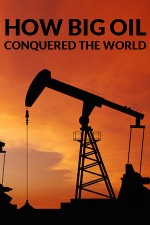
"The world we live in today is the world created in Devil Bill's image. It's a world founded on treachery, deceit, and the naivity of the public that has never wised up to the parlor tricks that the Rockefellers and their elk have been using to shape the world for the past century and health."
Oil. From farm to pharmaceutical, diesel truck to dinner plate, pipeline to plastic product, it is impossible to think of an area of our modern-day lives that is not effected by the petrochemical industry. The story of oil is the story of the modern world.
Parts of that story are well-known: Rockefeller and Standard Oil; the internal combustion engine and the transformation of global transport; the House of Saud and the oil wars in the Middle East.
Other parts are more obscure: the quest for oil and the outbreak of World War I; the petrochemical interests behind modern medicine; the Big Oil money behind the "Green Revolution" and the "Gene Revolution."
But that story, properly told, begins somewhere unexpected. Not in Pennsylvania with the first commercial drilling operation and the first oil boom, but in the rural backwoods of early 19th century New York state. And it doesn't start with crude oil or its derivatives, but a different product altogether: snake oil. (Excerpt from main website)
Please visit the official website for more information:
https://www.corbettreport.com/how-big-oil-conquered-the-world/
How To Be A Gardener (2-part series)
Directed by Kathryn Moore
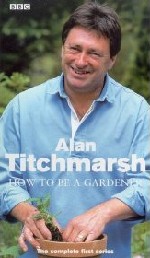
"Let’s face it, gardening can be pretty daunting. All those Latin names, the bugs and blights that can attack your plants just when they are looking their prettiest. How does anyone manage to grow anything?" –Alan Titchmarsh
"Part One of ‘How to be a gardener’ will explain all that. It’s not magic, it’s common sense. I can’t promise you a copper-bottomed guarantee, but I can help you to learn how to avoid the pitfalls and make the most of what you’ve got.
This online resource, prepared in collaboration with the Royal Horticultural Society, will bring life to your learning. There will be eight modules in all. You can work through them, or simply dip in, it’s up to you. The modules cover everything you need to know to give you a great start in gardening.
At the end of each module you can test your knowledge with a quiz. And there’s even a certificate to be gained.
I love gardening because it is the stuff of life, and it still gives me a thrill to sow seeds and grow plants. Enjoyment is what this course is all about." (Excerpt from main website)
Please visit the official website for more information:
http://www.bbc.co.uk
Jungle Trip
Directed by Gavin Searle

"What I'm interested in is a little backwater, which are the plants that speak to us, the plants that tell us what they're good for, the plants that actually have something to say directly to the person taking them."
Lost in the heart of the Peruvian Amazon, there is a vine that is said to talk to humans, giving an understanding to the secrets of life. The custodians of this plant are the medicine men, or shamans. The divine does not give up its secrets easily.
It appears the botany of the plant is only half the story. To know it fully, you must experience its effects. Ever since he discovered the talking plants, studying human sciences at University, he has experienced with the hallucinogenic flora. British plants are one thing, but in the Amazon they use Banisteriopsis caapi, or Ayahuasca, for their therapy and it's a strong medicine. The bitter Ayahuasca brew first makes its drinker violently sick, but it's in the fierce and often terrifying hallucinations that follow that the healing is said to lie. But Ayahuasca doesn't work on its own, rather it acts as a key to unlock the psychotropic qualities of another plant, and it's this plant that Piers is after. (Excerpt from film)
Please visit the official website for more information:
http://www.keofilms.com
Life Running Out Of Control
Produced by Michel Morales & Bertram Verhaag
"And now you got companies that are putting foreign genes in animals and fish that are changing the crops of the world fundamentally at the genetic level and polluting the planet with this genetic pollution. And once again: only a few scientists, corporation and government regulators are making decision, there is no democratic decision making. ” –Andrew Kimbrell
In the mid 1980s, scientists unlocked the genetic keys to manipulating our world. Suddenly everything seemed possible! There would be no more hunger or malnutrition; diseases would be vanquished and poverty wiped out. But twenty years on the situation looks very different. From the loss of biodiversity to health scares about GM food, the effects of genetic technology are prompting more and more debate. Our documentary this week is an intelligent look at both sides of the issue. Made for ARTE.
Across the world, multinationals like Monsanto are meeting with unexpected resistance to their genetically modified products. But are these concerns justified? Or are activists battling the forces of progress? Renowned filmmakers Bertram Verhaag and Gabriele Krober sets out on a global journey to explore the development of genetic technology. Spanning three continents and beautifully filmed, this high quality doc hears from the scientists, farmers and activists at the heart of the debate.
“Monsanto Out! Monsanto Out!” chants a crowd of angry Indian farmers. They blame the multinational for enslaving them in debt by selling unreliable genetically modified seeds at quadruple the normal price. The seeds were supposed to yield bumper crops, require less pesticides and produce higher quality cotton. But the anticipated large harvest failed to materialise. Instead the plants were rife with disease, forcing them to use more and more expensive chemicals.
Now many farmers face ruin. Having borrowed heavily at exorbitant rates of interest to afford the seeds, they cannot keep up with repayments. In the last few years, thousands have committed suicide. Others try desperately to pay their debts by selling a kidney. But regardless of how many crops fail, farmers are still dependent on the multinationals for their next batch of seeds. “The failure of agriculture is the market success for the corporations,” laments activist Vandana Shiva. “That’s the real tragedy of genetic engineering.” (Excerpt from main website)
Please visit the official website for more information:
http://www.journeyman.tv
The Light Bulb Conspiracy
Directed by Cosima Dannoritzer

"Ironically, the light bulb has always been a symbol for ideas and innovations, and yet, it's one of the earliest and best examples of planned obsolescence."
There once was a time when consumer goods were built to last. Then, in the 1920s, a group of businessmen realized that the longer their product lasted, the less money they made, thus ‘Planned Obsolescence’ was born, and manufacturers have been engineering products to fail ever since.
Cosima Dannoritzer’s documentary The Light Bulb Conspiracy beautifully separates fact from myth as it charts the rise and evolution of Planned Obsolescence from the early 20th century up to the present, and looks at its impact on our current society. The sight of thousands of tons of electronic equipment dumped in Ghana, Africa, in what used to be a natural reserve—which is now completely destroyed and polluted, is a harrowing reminder of the dark side of the consumer society.
What makes this film fascinating is that it goes beyond the environmental frame to tackle a much more fundamental aspect of the issue—the economic logic behind Planned Obsolescence. As an advertising magazine warned in 1928, “an article that refuses to wear out is a tragedy for business.” With examples ranging from light bulbs to nylon stockings, from cars to iPods and inkjet printers, the film deftly explores how Planned Obsolescence has become the basis for economic growth with a highly crafted combination of investigative research and rare archive footage. (Excerpt from website)
Please visit the official website for more information:
http://www.arte.tv
Microcosmos
Produced by Jacques Perrin
"Chirp Chirp"
Microcosmos, Claude Nuridsany and Marie Pérennou's incredible film of a meadow on a summers day, released in 1996, 84 minutes. In Microcosmos the animal world is bought to life with the aid of 'Macrovision ' and specially adapted cameras. In Microcosmos the images are so good that you have to remind yourself that this is real life, and this happens every hour of every day.
Microcosmos provides romance, chivalry, humor, drama and a unique look at entomological eroticism. 15 years of research, 2 years of equipment design, 3 years of shooting, Microcosmos shows that you don't have to turn to science fiction to find an alien and unimaginable world. (Excerpt from website)
Please visit site for more information:
http://en.wikipedia.org
Modern Meat
Directed by Doug Hamilton
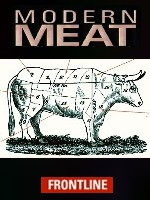
"Industrialization of our meat supply opened up a conduit for salmonella, for camphylobacter, for E. coli 0157 infections."
What could be simpler than a hamburger? Take a ground beef patty, throw it on a grill, wait a few minutes as the fat sizzles, maybe add some cheese, and stick it on a bun. It's a thoroughly American operation that takes place countless times a day all around the country. The average American, in fact, eats three hamburgers a week. And with more meat available than ever before, today's beef costs 30 percent less than it did in 1970, making it that much more attractive to consumers looking for a quick, cheap meal.
But in "Modern Meat," FRONTLINE goes inside the world of the modern American meat industry and shows that this once simple product, the hamburger, is no longer so simple.
Nor can you assume that it's safe. While sweeping changes in the meat industry -- making it vastly more centralized, high-tech, and efficient -- have led to the low prices, the transformation has also introduced new risks. In "Modern Meat," FRONTLINE speaks with scientists and industry observers who say that pooling thousands of cows in feedlots makes it easier for bacteria to spread from one animal to another.
"Cows tend to produce feces [and] feces is primarily bacteria," says Glenn Morris, a microbiologist at the University of Maryland and a former USDA official. "In the larger feedlots," he adds, "there's a greater chance for the passage of microorganisms back and forth. All of that contributes to the spread of microorganisms like E. coli." (Excerpt from main website)
Please visit the offical website for more information:
http://www.pbs.org
Natural Mystery (4-part series)
Produced by Rob Maciver

"It seems there is no real division between the mind and the body. Both work together as part of the human whole and changes in one influence the other. Nothing is all in the mind, or just physical. We seem to be extraordinary mixtures of mind and matter, able almost to use one to create the other. Each one of us certainly has the power and science now has given us the means to take personal responsibility for our own well-being. We can control our own pain, look after our own fitness, and take drug free action against infection."
Episode 1: Mind Over Body
Investigations into the power of mind over the body. Touches on many subjects including self healing (including cancer, heavy burns), hypnosis, kung fu, deep free diving, anesthetic free operations, mental exercise.
Episode 2: Vibrations
Investigation into natural vibrations and how we and animals perceive them, including pre earthquake tremors, dolphin interaction, and Sharie Edwards - who can produce sine waves with her voice!
Episode 3: Electrical Bodies
Electrical phenomenon of the body: auras, plant 'communication', energy healing, acupuncture, and animal acupuncture.
Episode 4: Extra sensory Mind
Investigates psychic abilities, near death experiences, out of body experiences, remote viewing (Operation Stargate), identical twin and close friend synchronicity phenomenon, 'stare effect' etc etc to see if theres anything behind the common claims that the mind is capable of more...
Not For Sale
Produced by The Observatorio of Corporate Social Responsibility (CSR)

"Big multinational corporations are not only threatening the interests of the developing countries, but they are also carrying out their daunting and incontrollable actions within developed countries. The trust we have in ourselves, our faith in humanity, and the certainty that our values will prevail, cannot be destroyed." -Salvador Allende
People all around the world are becoming increasingly dependent on a small number of large multinational businesses. Monsanto controls 90% of the production of genetically modified seeds. Microsoft holds an 88.26% market share of the software industry, followed by apple with Mac who hold 9.93%. Everyday, 150 million people throughout the world, buy an Unilever product without even realising it. McDonalds, serve 58.1million meals a day around the world. 51 of the worlds 100 biggest economies are businesses. The state loses power at the same rate as businesses gains it. Globalisation has created a context which requires a redefinition of the rules for global 21st century society.
Within this context rises the debate of Social Corporate Responsibility. Companies should re-establish the balance between economic development, sustainable environment and the social development needed in order to build the new society that we long for. Even though a gradual interest in Coporate Social Responsibility is appearing as much in business circles as in social circles, the process is still slow. Meanwhile, the set-up of new norms that regulate the global activity of the companies and prevent negative impacts on the environment and human rights, are becoming more than ever necessary.
It is time that we consider the type of society which we wish to build, and what role we want to play in its development. We must assume the role of all of those affected by the application of responsible practices, throughout all areas of business activity including consumers, workers and public opinion. (Excerpt from main website)
Please visit the official website for more information:
http://www.noalaventa.com
Off The Grid
Directed by Les Stroud
"A lot of people say they wish they could live this way, closer to nature, more environmentally conscious, self-sufficient. No more hydro bills or water pumps. It’s possible and you don’t have to move to the country to do it. Even if nature’s not your thing, not having a hydro bill and helping the environment should be. If we’re to live in ways that are self-sustaining, we can’t help but live a life of conflict. It’s too late to go back to living in tepees or traveling by horse, but it’s not too late to get off the grid."
Thoreau said that if an emergency struck, a man should be able to leave his home with nothing more than the clothing on his back and feel like he left nothing behind. Self sufficiency is almost impossible to obtain in modern society. Did you know there's a dream that still prevails now as strongly as it did in 1882 when Thoreau wrote Walden? It's that of a return to the wild.
This is not the story of hippie-communal-back-to-the-landers, this is the story of what it takes to live with alternative power sources now - to live with nature in this modern age. This is to be our permanent Walden; a life lived off the grid. (Excerpt from film)
Please visit the official website for more information:
http://lesstroud.ca/tv/off-the-grid
Owning The Weather
Produced by Spine Films

"Chemically fertilizing the oceans, beaming microwaves to earth, covering the oceans' surfaces with polymers, steering hurricanes, none of these are far-fetched. But will science lead us to the next golden era or to absolute devastation? When we finally own the weather, what will we do with it?"
Nothing is more terrifying that weather gone. Since the very beginning we’ve search for ways to manipulate mother nature. Now thanks to technological leaps in the last three decades, the holy grail of climate science may actually be in our reach as we strive to own the weather.
Chaos theory hurricane control, advanced cloud seeding, massive ionospheric heaters, storm absorbing super gels, nano scale weather machines, some barely visible to the human eye. All of these technologies exist in some form today – many of them are being tested at this very moment. In many parts of the world, large-scale modification is already common place, and with good reason. (Excerpt from film)
Pale Blue Dot
Written and Narrated by Carl Sagan

"The earth is a very small stage in a vast cosmic arena. Think of the rivers of blood spilled by all those generals and emperors so that in glory and triumph, they can become the momentary masters of a fraction of a dot. Think of the endless cruelties visited by the inhabitants of one corner of this pixel on this scarcely distinguishable inhabitants of some other corner; how frequent their misunderstandings, how eager they are to kill one another, how fervent their hatred. Our posturing, our imagined self-importance, the delusion that we have some privileged position in this universe are challenged by this point of pale light."
As the ancient myth makers knew, we're children equally of the earth and the sky. In our tenor on this planet, we've accumulated dangerous evolutionary baggage - propensities for aggressions and ritual, submissions to leaders, hostility to outsiders - all of which puts our survival in some doubt. But we've also acquired compassion for others, love for our children, a desire to learn from history and experience, and a great, soaring, passionate intelligence - the clear tools for our continued survival and prosperity.
Which aspects of our nature will prevail is uncertain, particularly when our visions and prospects are bound to one small part of this small planet earth. But up there in the cosmos, an inescapable perspective awaits. National boundaries are not evident when we view the earth from space. Fanatic ethnic or religious or national identifications are little difficult to support when we see our planet as a fragile blue crescent fading to become an inconspicuous point of light against the vast citadel of the stars. (Excerpt from film)
Patent For A Pig: The Big Business of Genetics
Directed by Christian Jentzsch

"How can you claim a patent on something that already exists? They might as well appy for a patent on sunlight or requre a patent and charge license fees to have children." –Christian Jentzsch
The American biotechnology firm, Monsanto, has applied for a patent for pig breeding in 160 countries. The patent is for specific parts of the genetic material of pigs which Monsanto's genetic researchers have decoded. If this patent is granted, pig breeding would be possible with the approval of the company.
Farmers and breeders are naturally alarmed because these genes have long existed in the great majority of their pigs. Using DNA tests they can prove that there is no new invention in the patent applications but that, instead, granting this patent would be to allow a part of nature to fall into the hands of a single company.
Monsanto's influence on the patent offices is huge. If the patent is approved, money will have to be paid to Monsanto for every pig in the world carrying this genetic marker. This has long been the case for certain feedstuffs, such as genetically modified maize. Many farmers in the US have already become dependent on the company. It is not merely a question of money, however, but also a question of the risk posed to consumers. In America, as in Europe, cases of infertility in animals fed with genetically modified maize are becoming increasingly common. No-one yet knows what effects such products are having on humans. (Excerpt from website)
Please visit site for more information:
http://www.enhancetv.com.
Planet Earth (11-part series)
Narrated by David Attenborough
"A hundred years ago, there were one and a half billion people on Earth. Now, over six billion crowd our fragile planet. But even so, there are still places barely touched by humanity. This series will take you to the last wildernesses and show you the planet and its wildlife as you have never seen them before."
More than five years in the making, PLANET EARTH redefines blue-chip natural history filmmaking and continues the Discovery Channel mission to provide the highest quality programming in the world. The 11-part series will amaze viewers with never-before-seen animal behaviors, startling views of locations captured by cameras for the first time, and unprecedented high-definition production techniques. Award-winning actress and conservationist Sigourney Weaver is the series' narrator. (Excerpt from main website)
Please visit site for more information:
http://dsc.discovery.com
Plants for a Future
Produced by Malcolm Baldwln

"A garden you can eat, a garden you can wear, a garden you can use as your medicines, a garden you can use as fuel and to build your houses...a garden full of purposes, and a garden you can enjoy as well - that you can sit in - and a garden that doesn't take up all your time. You can actually, for a few hours of work each week, produce the things that you need." –Ken Fern
Ten years as a London bus drive drove Ken Fern to look for an alternative way of life. After a period of grindingly hard work growing annual crops on a small plot in Sari, he decided to investigate news ways of rearing plants which were not quite so labor intensive. Inspired by Robert Hart's ideas and the will to make their dreams a reality, Ken and his wife Addy finally settled on a 28 acre field in Cornwall, which is exposed to the full force of southwest winds blowing in from the Atlantic. (Excerpt from film)
Please visit the official website for more information:
http://www.pfaf.org
Poison on the Platter
Produced and Directed by Mahesh Bhatt and Ajay Kanchan
"If people let government decide what foods they eat, their bodies will soon be in as sorry a state as are the souls of those who live under tyranny." –Thomas Jefferson
“Poison on the Platter”, is an eye-opening film, made by Mahesh Bhatt and Ajay Kanchan, illustrating how all of our lives are gonna be (adversely) affected by genetically modified foods. It is no more a farmer’s issue alone, it’s a matter of the consumers’ right to food safety. You and I wouldn’t even be able to separate/choose a normal Brinjal from/over a GM one, if Bt Brinjal - a GM crop produced by the mighty agri-MNC Monsanto - is let through by our corrupt regulatory body. Let’s put up strong resistance, demanding a ban on GM food/crops for 5 years, until they are proven safe for human consumption by independent, long-term studies. (Excerpt from video.yahoo.com)
Please visit website for more information:
http://gmfreekarnataka.wordpress.com
The Power of Community: How Cuba Survived Peak Oil
Directed by Faith Morgan

"The people cooperating with and caring about each other are the main factors that we need to encourage. We can all plant fruit trees; we can all have water catchment devices on our roofs. It's not the technology, it's the human relationships." –Patricia Allison, permaculturist
When Cuba lost access to Soviet oil in the early 1990s, the country faced an immediate crisis – feeding the population – and an ongoing challenge: how to create a new low-energy society. This film tells the story of the Cuban people's hardship, ingenuity, and triumph over sudden adversity – through cooperation, conservation, and community.
"Everyone concerned about Peak Oil should see this film." Richard Heinberg. (Excerpt from main website)
Please visit the official website for more information:
http://www.powerofcommunity.org
The Private Life of Plants (6-part series)
Produced by Mike Salisbury
"Ever since we arrived on this planet as a species, we've cut them down, dug them up, burnt them and poisoned them. Today we're doing so on a greater scale than ever [...] We destroy plants at our peril. Neither we nor any other animal can survive without them. The time has now come for us to cherish our green inheritance, not to pillage it — for without it, we will surely perish."
The series utilises time-lapse sequences extensively in order to grant insights that would otherwise be almost impossible. Plants live on a different time scale, and even though their life is highly complex and often surprising, most of it is invisible to humans unless events that happen over months or even years are shown within seconds. Like many traditional wildlife documentaries, it makes use of almost no computer animation. The series also discusses fungi, although as it is pointed out, these do not belong to the kingdom of plants.
The mechanisms of evolution are taught transparently by showing the advantages of various types of plant behaviour in action. The adaptations are often complex, as it becomes clear that the environment to which plants must adapt comprises not just soil, water and weather, but also other plants, fungi, insects and other animals, and even humans. The series shows that co-operative strategies are often much more effective than predatory ones, as these often lead to the prey developing methods of self-defence — from plants growing spikes to insects learning to recognise mimicry. Yet humans can work around all these rules of nature, so Attenborough concludes with a plea to preserve plants, in the interest of self-preservation. (Excerpt from website)
Please visit website for more information:
http://en.wikipedia.org/wiki/The_Private_Life_of_Plants
RESONANCE - Beings of Frequency
Producted by James Russell

"The pulse of the earth, Schumann Resonance, was exactly 7.83 hertz. The discovery was remarkable. Schumann Resonance wasn't just similar to alpha waves of the human brain, it was identical. The brain's frequency which controls our creativity, our performance, our stress, anxiety, and our immune system had somehow tuned into the frequency of the planet. The pulse of the earth had become the pulse of life itself."
RESONANCE is a sensational eye opening documentary which reveals the harm we are doing by existing in an ocean of man made wireless frequencies.
Two billion years ago life first arrived on this planet; a planet, which was filled with a natural frequency. As life slowly evolved, it did so surrounded by this frequency. and Inevitably, it began tuning in.
By the time mankind arrived on earth an incredible relationship had been struck; a relationship that science is just beginning to comprehend.
Research is showing that being exposed to this frequency is absolutely integral to us. It controls our mental and physical health, it synchronizes our circadian rhythms, and it aids our immune system and improves our sense of wellbeing.
Not only are we surrounded by natural frequencies, our bodies are filled with them too. Our cells communicate using electro magnetic frequencies. Our brain emits a constant stream of frequencies and our DNA delivers instructions, using frequency waves. Without them we couldn't exist for more than a second.
This delicate balance has taken billions of years to perfect. But over the last 25 years the harmony has been disturbed. and disturbed dramatically.
Mankind has submerged itself in an ocean of artificial frequencies. They are all around us, filling the air and drowning out the earth's natural resonance.
To the naked eye the planet appears to be the same. But at a cellular level it is the biggest change that life on earth has endured; the affects of which we are just starting to see and feel.(Excerpt from website)
Please visit website for more information:
facebook.com/resonancebeingsoffrequency
Santa's Workshop: Inside China's Slave Labour Toy Factories
Directed By Lotta Ekelund & Kristina Bjurling

"Sometimes we have no choice, we work till dawn. When you work all night you become dizzy and your eyes hurt because you can't take any breaks."
SANTA'S WORKSHOP takes you to the real world of China's toy factories. Workers tell us about long working hours, low wages, and dangerous work places. Those who protest or try to organize trade unions risk imprisonment.
Low labour costs attract more and more companies to China. Today more than 75% of our toys are made in China. But this industry takes its toll on the workers and on the environment.
The European (and American) buyers blame bad conditions on the Chinese suppliers. But they say that increasingly hard competition gives them no option. Who should we believe? And what can you do to bring about a fairer and more humane toy trade? (Excerpt from video.google.com)
Satoyama - Japan's Secret Watergardens
Directed by Masumi Mizunuma

"Each home has a built in pool or water tank that lies partly inside, partly outside its’ walls… A continuous stream of spring water is piped right into a basin, so freshwater is always available. People rinse out pots in the tank and clean their freshly picked vegetables. If they simply pour the food scraps back in the water, they risk polluting the whole village supply. However, carp can scour out even the greasy or burnt pans. They do the washing up in Satoyama villages. This traditional arrangement is called the riverside method. It’s used all over Japan. Cleaned up by the carp, the tank water eventually rejoins the channel."
Imagine a realm where the season's rhythms rule, where centuries of agriculture and fishing have reshaped the land, yet where people and nature remain in harmony. Sangoro Tanaka lives in just such a paradise. At 83, he's the guardian of one of Japan's secret watergardens.
Over a thousand years, towns and villages have developed a unique system to make springs and water part of their homes. From inside their houses, the stream pours into Japan’s largest fresh water lake, near the ancient capital of Kyoto. This is a habitat so precious, the Japanese have a special word for it, satoyama, villages where mountains give way to plains. They are exceptional environments essential to both the people who maintain them and to the wildlife that now share them. (Excerpt from film)
Please visit the official website for more information:
http://www.bbc.co.uk
Scientists Under Attack: Genetic Engineering in the Magnetic Field of Money
Directed by Bertram Varhaag

"The attack on scientists is very well structured by the biotech industry. It's systematic. It's worldwide. It's very coordinated. It's part of the way that they do business. So anywhere in the world, at anytime, if someone finds a problem, they are jumped on. If the problem is really severe, they get jumped on even more, whenever there is something that comes up that can threaten this biotechnology empire." -Jeffrey Smith
"[S]cientists under Attack" is a documentary thriller on the theme of genetic engineering and the independence of science. We exemplary show the fate of scientists - such as Árpád Pusztai and Ignacio Chapela - who do research in the field of genetic engineering and who were punished hard through character assassination and by withdrawing their means of research from them. They are only examples for many important scientists whose careers have been ruined. Statements of scientists prove that 95 % of the scientists in the field of genetic engineering are paid by the industry. Only 5% are independent. The loss of freedom of thought and democracy is obvious. May the public - may we all - still trust the scientists? (Excerpt from main website)
Please visit the official website for more information:
http://scientistsunderattack.com
The Secret Life of Plants
Directed by Walon Green
"It means even on the lower levels of life, there is a profound consciousness or awareness that bonds all things together." –Cleve Backster
Published in 1973, The Secret Life of Plants was written by Peter Tompkins and Christopher Bird. It is described as "A fascinating account of the physical, emotional, and spiritual relations between plants and man."
Essentially, the subject of the book is the idea that plants may be sentient, despite their lack of a nervous system and a brain. This sentience is observed primarily through changes in the plant's conductivity, as through a polygraph, as pioneered by Cleve Backster. The book also contains a summary of Goethe's theory of plant metamorphosis.
That said, this book is about much more than just plants; it delves quite deeply into such topics as the aura, psychophysics, orgone, radionics, kirlian photography, magnetism / magnetotropism, bioelectrics, dowsing, and the history of science.
It was the basis for the 1979 documentary of the same name, with a soundtrack especially recorded by Stevie Wonder. (Excerpt from Wikipedia)
Slow Poisoning of India, The
Directed By Ramesh Menon

"Our greatest weakness may be food, but this mouthwatering meal may have around half a milligram of pesticides in it. If that has to be quantified, it is less than a pinprick. But do you realize that this would mean that you are ingesting pesticide that is more than forty times what an average American would consume?"
The Slow Poisoning of India is a 26-minute documentary film directed by Ramesh Menon and produced by the New Delhi-based The Energy and Resources Institute (TERI). It deals with the dangers of excessive use of pesticide in agriculture. India is one of the largest users of pesticide in Asia and also one of the largest manufactures. The toxins have entered into the food chain and into our breakfast, lunch and dinner.
The film showcases startling case studies from Kerala where villagers in Kasaragod district are paying a heavy price as it has been exposed to pesticide spraying for many years. It talks of the health impacts in other parts of India and also on how the magic of the green revolution in Punjab is fading as land and water bodies have been poisoned.
But some farmers are bouncing back into better practices, and this is a silver lining shown towards the end. "Many farmers are now switching from chemcial to organic farming as they see that it is the only way out of getting into a spiralling whirlpool of debt created by the high cost of pesticides. Farmers like Tokia Modu in Warangal are waging a silent biological war against pests and are winning." (Excerpt from website)
Please visit site for more information:
http://www.indiatogether.org
The Story of Stuff
Produced by Annie Leonard
"But the truth is, it's a system in crisis, and the reason it's a system in crisis is it's a linear system and we live on a finite planet, and you cannot run a linear system on a finite planet indefinitely."
From its extraction through sale, use and disposal, all the stuff in our lives affects communities at home and abroad, yet most of this is hidden from view. The Story of Stuff is a 20-minute, fast-paced, fact-filled look at the underside of our production and consumption patterns. The Story of Stuff exposes the connections between a huge number of environmental and social issues, and calls us together to create a more sustainable and just world. It'll teach you something, it'll make you laugh, and it just may change the way you look at all the stuff in your life forever. (Excerpt from main website)
Please visit the offical website for more information:
http://www.storyofstuff.com
Supernatural - The Unseen Powers of Animals (6-part series)
Produced by John Downer
"A close encounter with the hidden powers of animals can be one of the most supernatural experiences on earth... Mysteries still remain. Harness the truly supernatural powers of animals and who knows what the future may bring."
This landmark series explores the outer limits of recent scientific discoveries and encounters sharks that can perceive human electric auras and dolphins that use ultrasound to see human embryos in the womb.
There are frogs that have mastered cryogenics and can literally freeze themselves out of life for six months, and lizards that cry blood.
In this "strange but true" world, lizards walk on water, bacteria make gold and pets predict earthquakes. Science shows that most animals live in a different sensory and physical world to humans. Enter their world and weird phenomena such as raining fishes and stranded whales suddenly make sense. (Excerpt from website)
Please visit the official website for more information:
http://www.jdp.co.uk
SURVIVAL (5-part series)
Produced by Micheal Blomgren
"My name is Michel Blomgren and my passion is wilderness survival, the art of keeping yourself alive under harsh circumstances."
SURVIVAL: Episode 1 - Five points survival
I illustrate a person who get lost and at the same time go through my 5 points. The episode deals with immobilizing fear, our need for warmth & water, spruce roots as string, fire with fire steel, tinder, feather sticks & fire wood, spruce bows as a bed and smoke signal.
SURVIVAL: Episode 2 - Starvation
If it's something I maintain to that one can do without in a typical survival situation (shorter than a couple of weeks), it's food. In this episode I get out in nature to starve for one day while I also present my gear in (too much) detail. I also brought a blood glucose meter to measure my blood sugar level. It's revealed that spruce needle tea contains some amount of sugar (although small).
SURVIVAL: Episode 3 - Quest for The Stone
A short episode about fire making with a carbon steel knife, quartz and charred cloth. The episode also demonstrates how to boil water or cook food without a pot. The speech is now in English (or Swenglish rather).
SURVIVAL: Episode 4 - In The Cold of The Night
No shelter, no sleeping bag, no food, just a multitool, a traditional fire making kit, and some spare clothing... in other words: an ordinary weekend after work.
SURVIVAL: Episode 5 - Survival and Abseiling
Me and Johan Forsberg from Nordic Bushcraft starve in the forest during a weekend while attempting to move cross the terrain and abseil/rappel down mountain cliffs. It was rainy and Johan didn't bring a sleeping bag or a proper shelter. We brought very little food, but I still enjoyed the comfort of a bivybag, a sleeping bag, and a sleeping mat which made the night comfortable. (Excerpt from main website)
Please visit the official website for more information:
http://www.bushcraft.se
The Sustainable City
Directed by Jean Vercoutere

"Today, the way ecology is being incorporated into architecture has evolved considerably. Sustainable architecture, or green architecture, aims to minimize the negative impact of buildings on the environment by enhancing efficiency and moderating the use of materials, energy, and space."
Spewing carbon dioxide, generating masses of waste, and consuming alarming quantities of energy and water, our cities place a heavy burden on both the global environment and the local ecosystem. Architecture itself has a tremendous impact on the environment.
Today, the way ecology is being incorporated into architecture has evolved considerably. Sustainable architecture, or green architecture, aims to minimize the negative impact of buildings on the environment by enhancing efficiency and moderating the use of materials, energy, and space. (Excerpt from film)
Please visit the official website for more information:
http://www.ampersand.fr
THRIVE: What On Earth Will It Take?
Directed by Foster Gamble and Kimberly Carter Gamble
"But as powerful as they are, the architects of the new world order cannot create their dreadful vision withour our collusion. To stop them, to render their agenda obsolete, we have to wake up. We have to take action."
THRIVE is an unconventional documentary that lifts the veil on what's REALLY going on in our world by following the money upstream -- uncovering the global consolidation of power in nearly every aspect of our lives. Weaving together breakthroughs in science, consciousness and activism, THRIVE offers real solutions, empowering us with unprecedented and bold strategies for reclaiming our lives and our future.(Excerpt from website)
Please visit the official website for more information:
http://www.thrivemovement.com/the_movie
TRUDELL
Directed by Heather Rae

"The great lie is that it is civilization. It's not civilized. It has been literally the most blood thirsty brutalizing system ever imposed upon this planet. That is not civilization. That's the great lie, is that it represents civilization." -John Trudell
At its most basic level, TRUDELL is an eye-opening documentary that challenges belief systems. At its loftiest, TRUDELL will inspire you to reawaken your spirit.
In the telling of TRUDELL, Rae invested more than 12 years chronicling John Trudell's travels, spoken word, and politics. (The making of the movie, a journey in itself, is as much a story as the finished product. See the production notes.) The film combines archival, convert, and interview footage in a lyrical and naturally stylized manner, with abstract imagery mirroring the coyote nature of Trudell. (Excerpt from main website)
Please visit the official website for more information:
http://www.trudellthemovie.com
Urban Permaculture
Produced by Malcolm Baldwln

"You look at the world around us and you think everything is going to hell and you don't know what to do about it, but all of the sudden somebody says, 'think global, but act local'...and what is more local than producing food for yourself? If you don't produce food for yourself than somebody else is going to have to do it for you and use energy to do it." –Michael Guerra
Most people would have looked at the little back garden, ten metres by four, and immediately written it off as a place to grow food. Yet, with little money and not much experience of practical gardening, Michael and Julia Guerra turned this unpromising site into a powerhouse of abundance.
Julie had a bit of gardening knowledge, but Michael hadn’t so much as sown a seed when they decided to start growing food. But he did have design skills, partly from his background as an engineer and partly from a permaculture design course. Design skills are helpful but most important is taking your time to think about what you’re going to do: in their impatience to get growing, Michael and Julia spent much of their first season wishing they’d done things differently, and spent time the following winter deciding how to change the lay out. The actual change only took them one weekend’s work. (Excerpt from book)
Please visit the official website for more information:
http://books.google.com
Waste = Food
Directed by Rob van Hattum
"We are the only ones who take materials and put them into landfills, so we make waste. Even when we try to minimize waste, like zero emissions or zero waste, we still accept the concept of waste. So what we do is eliminate the concept of waste. For us, we decide everything is a nutrient, for a biological system or a technical system, so it's beneficial...So we generate systems which are beneficial...so in this case we say 'waste equals food.'" –Michael Braungart, chemist
Man is the only creature that produces landfills. Natural resources are being depleted on a rapid scale while production and consumption are rising in nations like China and India. The waste production world wide is enormous and if we do not do anything we will soon have turned all our resources into one big messy landfill. But there is hope. The German chemist, Michael Braungart, and the American designer-architect William McDonough are fundamentally changing the way we produce and build. If waste would become food for the biosphere or the technosphere (all the technical products we make), production and consumption could become beneficial for the planet.
A design and production concept that they call Cradle to Cradle. A concept that is seen as the next industrial revolution.
- Design every product in such a way that at the end of its lifecycle the component materials become a new resource.
- Design buildings in such a way that they produce energy and become a friend to the environment.
Large companies like Ford and Nike are working with McDonough and Braungart to change their production facilities and their products. They realize that economically seen waste is destruction of capital. You make something with no value. Based on their ideas the Chinese government is working towards a circular economy where Waste = Food. An amazing story that will definitely change your way of thinking about production and consumption. (Excerpt from main website)
Please visit the official website for more information:
http://www.vpro.nl
We Feed The World
Directed by Erwin Wagenhofer

"When 100,000 people die of starvation it's said we can't feed them, or is it just that we don't want to feed them? From where does the money come from? From the poor! The rich won't let go of their money...That's how it is. And it's the same with food; we let them die so we can live..."
Every day in Vienna the amount of unsold bread sent back to be disposed of is enough to supply Austria's second-largest city, Graz. Around 350,000 hectares of agricultural land, above all in Latin America, are dedicated to the cultivation of soybeans to feed Austria's livestock while one quarter of the local population starves. Every European eats ten kilograms a year of artificially irrigated greenhouse vegetables from southern Spain, with water shortages the result.
In WE FEED THE WORLD, Austrian filmmaker Erwin Wagenhofer traces the origins of the food we eat. His journey takes him to France, Spain, Romania, Switzerland, Brazil and back to Austria.
Leading us through the film is an interview with Jean Ziegler, the United Nations Special Rapporteur on the Right to Food.
WE FEED THE WORLD is a film about food and globalisation, fishermen and farmers, long-distance lorry drivers and high-powered corporate executives, the flow of goods and cash flow–a film about scarcity amid plenty. With its unforgettable images, the film provides insight into the production of our food and answers the question what world hunger has to do with us .
Interviewed are not only fishermen, farmers, agronomists, biologists and the UN's Jean Ziegler, but also the director of production at Pioneer, the world's largest seed company, as well as Peter Brabeck, Chairman and CEO of Nestlé International, the largest food company in the world. (Excerpt from main website)
Please visit the official website for more information:
http://www.we-feed-the-world.at
Wegmans Cruelty
Produced by Compassionate Consumers
"In battery cages, hens do not have sufficient space to walk around or fully spread their wings. On our visits to Wegmans Egg Farm, we witnessed up to nine hens living in a space as small as filing cabinet. They are forced to live on a wire mesh floor, and are unable to perch or stand on solid ground. The hens are so crowded that they sometimes stand on each other. These conditions do not preclude Wegmans from using the Animal Care Certified Logo on their egg cartons."
Wegmans Cruelty is a half hour documentary produced by a small investigative team from the organization Compassionate Consumers. Organization members contacted Wegmans Food Markets to try to hold some meaningful dialogue about the conditions at Wegmans Egg Farm, and were then misled and dismissed by Wegmans representatives. The team set out to capture actual footage inside the farm and create a film based on their experience.
The film features statements from Wegmans representatives, interviews with the investigators, and footage of what life and death is like inside of a battery cage facility. Approximately 98% of all eggs produced in the United States come from hens that are housed in battery cages. Often unknowingly, customers are supporting the practices of modern egg farming by purchasing eggs.
Wegmans Food Markets, Inc. is a 68-store supermarket chain with stores in New York, Pennsylvania, New Jersey and Virginia. The family-owned company, founded in 1916, is recognized as an industry leader and innovator. Wegmans has been named one of the 'Top 100 Companies to Work For' by Fortune Magazine for the last several years. In 2005, Wegmans ranked #1 on the list. (Excerpt from main website)
Please visit the official website for more information:
http://www.wegmanscruelty.com
Weird Nature (6-part series)
Directed by John Downer
"There was a time when myths and science were entwined, when mermaids and unicorns could mysteriously appear. Nature was weird. When science revealed the truth behind these imaginary creatures, it found real animals lay behind the legends. Today, science still makes astonishing discoveries, but nature seems just as weird. It just that fact has broken free from fiction."
This BBC/DISCOVERY series reveals some of the strangest behaviour in the animal world. In a series of action-packed sequences, tyres fall from a truck and disturb salamanders, which turn into living wheels. Mexican jumping beans spring to life and take over a toy store. Fulmars use projectile vomit to attack a climber. Hagfish slime their way out of a fishing boat by turning water into mucus soup. A skunk teaches the hardest street gang a lesson in break-dancing. Animal junkies get high on some strange drugs and we even discover nature's alcoholics. Using new filming techniques and some extraordinary special FX - this is nature as never seen before. (Excerpt from main website)
Please visit the official website for more information:
http://www.jdp.co.uk
Who Killed The Electric Car
Directed by Chris Paine
"This wasn't the first time the electric car was killed. One hundred years ago, there were more electrics on the road than there were gas cars. For many people, electric cars were the car of choice. They were quite and smooth and could be charged at home. Gas cars by comparison required cranking and produced exhaust."
Who Killed the Electric Car? is a 2006 documentary film that explores the birth, limited commercialization, and subsequent death of the battery electric vehicle in the United States, specifically the General Motors EV1 of the 1990s. The film explores the roles of automobile manufacturers, the oil industry, the US government, batteries, hydrogen vehicles, and consumers in limiting the development and adoption of this technology. (Excerpt from Wikipedia)
Please visit the official website for more information:
http://www.whokilledtheelectriccar.com
Why Big Oil Conquered the World
Directed and Produced by James Corbett
"It's hard to fight an enemy that you don't recognize or can't see. That's the biggest problem in the world today, in my opinion, is that people have no visibility whatsoever of this issue. They've covered their tracks so well that nobody can see them. How can you fight an enemy that you don't know? I think famous Chinese general Sun Xiu brought that up hundred of years ago. You can't fight an enemy that you don't know. First we have to recognize who the enemy is." -Patrick Wood
At the dawn of the 20th century, a new international order was emerging. One founded on oil. And by the end of the 20th century, that order was firmly established. Heating. Transportation. Industrial power. Plastic manufacturing. Pharmaceuticals. There is no facet of modern life that is not, one way or another, dependent on oil.
But the rulers of this oiligarchy-the Rockefellers at Standard Oil, the British royals at BP, the Dutch royals and the Rothschilds at Royal Dutch Shell-were not content with mere financial domination. The power that came with their near-total monopoly on the world's most important commodity was enormous, and they had no qualms about using that power to re-make the world in their image.
As we saw in "How Big Oil Conquered the World," the impact of the oiligarchs has been breathtaking. From the education system to the medical profession, from the green revolution to the gene revolution, from World War to the Gulf War, oil money has been used to shape every aspect of the world we live in. With the rise of the petrodollar in the 1970s, even the international monetary system itself rests on oil.
But now, in the 21st century, it seems that the old order, the oil order, is finally coming to an end. (Excerpt from main website)
Please visit the official website for more information:
https://www.corbettreport.com/episode-321-why-big-oil-conquered-the-world/
The World According to Monsanto
Directed by Marie-Monique Robin

"There's nothing they are leaving untouched: the mustard, the okra, the bringe oil, the rice, the cauliflower. Once they have established the norm: that seed can be owned as their property, royalties can be collected. We will depend on them for every seed we grow of every crop we grow. If they control seed, they control food, they know it – it's strategic. It's more powerful than bombs. It's more powerful than guns. This is the best way to control the populations of the world." –Vandana Shiva
The story starts in the White House, where Monsanto often got its way by exerting disproportionate influence over policymakers via the “revolving door”. One example is Michael Taylor, who worked for Monsanto as an attorney before being appointed as deputy commissioner of the US Food and Drug Administration (FDA) in 1991. While at the FDA, the authority that deals with all US food approvals, Taylor made crucial decisions that led to the approval of GE foods and crops. Then he returned to Monsanto, becoming the company’s vice president for public policy.
Thanks to these intimate links between Monsanto and government agencies, the US adopted GE foods and crops without proper testing, without consumer labeling and in spite of serious questions hanging over their safety. Not coincidentally, Monsanto supplies 90 percent of the GE seeds used by the US market.
Monsanto’s long arm stretched so far that, in the early nineties, the US Food and Drugs Agency even ignored warnings of their own scientists, who were cautioning that GE crops could cause negative health effects. Other tactics the company uses to stifle concerns about their products include misleading advertising, bribery and concealing scientific evidence. (Excerpt from website)
Please visit the official website for more information:
http://www.arte.tv/monsanto (French)
A World Without Water
Produced and Directed by Brian Woods
"As less and less water is available, you have yet another problem being added and that is the problem of privatization. There are companies now saying 'why don't we bottle it, mine it, divert it, sell it, commodify it.' That greed of privatization, I believe, will be much worse than climate change and everything else that has left us with the water crisis." –Vandana Shiva
The world is running out of its most precious resource. True Vision's timely film tells of the personal tragedies behind the mounting privatisation of water supplies.
More than a billion people across the globe don’t have access to safe water. Every day 3900 children die as a result of insufficient or unclean water supplies. The situation can only get worse as water gets evermore scarce. (Excerpt from main website)
Please visit the official website for more information:
http://www.channel4.com
Visionaries: In Grave Danger of Falling Food
Produced and Directed by Tony Gailey and Julian Russell
"It's always been a system design of integrating good housing to landscape, least use of materials, least pollution output, conservation of natural resources - it's actually a very practical design system." –Bill Mollison
Permaculture is a bit of everything. To some it is architecture, to others, organic farming. Some say it is a philosophy and a way of life, others believe it is their only hope.
Permaculture is a design system, but the engineering principles it follows are those of life. Earth evolved from dust and gas and made in the energy of a huge hydrogen furnace known as the sun, a living system powerful enough to colonize an entire planet was born. Mollison looked at this process and saw a model. Here was a system that was stable and fertile, yet became ever more complex...and that is how Mollison believes are own environment should be. (Excerpt from film)
Please visit website for more information:
http://www.permaculture.org
Zeitgeist: Addendum
Produced by Peter Joseph

"We are seeing how very important it is to bring about in the human mind the radical revolution. The crisis is a crisis in consciousness. A crisis that cannot anymore accept the old norms, the old patterns, the ancient traditions, and considering what the world is now with all the misery, conflict, destructive brutality, aggression, and so on, man is still as he was, is still brutal, violent, aggressive, acquisitive, competitive, and he has built a society along these lines." –Jiddu Krishnamurti
The Zeitgeist Movement is not a political movement. It does not recognize nations, governments, races, religions, creeds or class. Our understandings conclude that these are false, outdated distinctions which are far from positive factors for true collective human growth and potential. Their basis is in power division and stratification, not unity and equality, which is our goal. While it is important to understand that everything in life is a natural progression, we must also acknowledge the reality that the human species has the ability to drastically slow and paralyze progress, through social structures which are out of date, dogmatic, and hence out of line with nature itself. The world you see today, full of war, corruption, elitism, poverty, epidemic disease, human rights abuses, inequality and crime is the result of this paralysis.
This movement is about awareness, in avocation of a fluid evolutionary progress, both personal, social, technological and spiritual. It recognizes that the human species is on a natural path for unification, derived from a communal acknowledgment of fundamental and near empirical understandings of how nature works and how we as humans fit into/are a part of this universal unfolding we call life. While this path does exist, it is unfortunately hindered and not recognized by the great majority of humans, who continue to perpetuate outdated and hence degenerative modes of conduct and association. It is this intellectual irrelevancy which the Zeitgeist Movement hopes to overcome through education and social action.
The goal is to revise our world society in accord with present day knowledge on all levels, not only creating awareness of social and technological possibilities many have been conditioned to think impossible or against "human nature", but also to provide a means to overcome those elements in society which perpetuate these outdated systems.
An important association, upon which many of the ideas of this movement are derived come from an organization called " The Venus Project" directed by social engineer and industrial designer, Jacque Fresco. He has worked nearly his entire life to create the tools needed to assist a design of the world which could eventually eradicate war, poverty, crime, social stratification and corruption. His notions are not radical or complex. They do not impose a subjective interpretation in their formation. In this model, society is created as a mirror of nature, with the variables predefined, inherently. (Excerpt from main website)
Please visit the official website for more information:
http://thezeitgeistmovement.com
Zeitgeist: Moving Forward
Directed by Peter Joseph
"In a decaying society, art, if it is truthful, must also reflect decay. And unless it wants to break faith with its social function, art must show the world as changeable, and help to change it." -Ernst Fischer
Zeitgeist: Moving Forward, by director Peter Joseph, is a feature length documentary work which will present a case for a needed transition out of the current socioeconomic monetary paradigm which governs the entire world society.
This subject matter will transcend the issues of cultural relativism and traditional ideology and move to relate the core, empirical "life ground" attributes of human and social survival, extrapolating those immutable natural laws into a new sustainable social paradigm called a "Resource-Based Economy". (Excerpt from main website)
Please visit the official website for more information:
http://www.zeitgeistmovingforward.com
Documentaries by Region
Environmental Directory
- Addicted to Plastic
- Aerosol Crimes (aka Chemtrails)
- Anthrax War
- As We Sow
- Big Ideas for a Small Planet: Power
- Bin Wars
- Blue Gold: World Water Wars
- Blue Planet
- California Dreaming
- Chernobyl Heart
- Clever Monkeys
- Coconut Revolution, The
- Corporation, The
- Cost of a Coke, The
- Cow At My Table, A
- Earthlings
- Disappearing Male, The
- Doctor, the Depleted Uranium, and the Dying Children, The
- Don't Swallow Your Toothpaste
- Doomsday Called Off
- Emotional World of Farm Animals, The
- End of Suburbia, The
- Ethos
- Farm for the Future, A
- Flotsam Found
- Flow - For Love of Water
- Fluoride Deception, The
- Food, Inc.
- Forest Gardening with Robert Hart
- Free Energy: The Race To Zero Point
- Future by Design
- Future of Food, The
- Gasland
- Genetic Conspiracy, The: Following the Trail
- Genetically Modified Food - Panacea or Poison?
- Global Warming or Global Governance?
- Great Natural Wonders of the World
- Here Comes The Sun
- Holes In Heaven?
- HOME
- Horse Boy, The
- How Big Oil Conquered the World
- How To Be A Gardener
- Jungle Trip
- Life Running Out Of Control
- Light Bulb Conspiracy, The
- Owning the Weather
- Microcosmos
- Modern Meat
- Natural Mystery
- Not For Sale
- Off The Grid
- Pale Blue Dot
- Patent For A Pig
- Planet Earth
- Plants for a Future
- Poison on the Platter
- Power of Community, The
- Private Life of Plants, The
- RESONANCE: Beings of Frequency
- Santa's Workshop: Inside China's Slave Labour
- Satoyama - Japan's Secret Watergardens
- Scientists Under Attack
- Secret Life of Plants, The
- Slow Poisoning of India, The
- Story of Stuff, The
- Supernatural - The Unseen Powers of Animals
- SURVIVAL
- Sustainable City, The
- This is What a Democracy Looks Like
- THRIVE: What On Earth Will It Take?
- Trudell
- Urban Permaculture
- Visionaries: In Grave Danger of Falling Food
- Waste = Food
- We Feed The World
- Wegmans Cruelty
- Weird Nature
- Who Killed The Electric Car
- Why Big Oil Conquered the World
- World According to Monsanto, The
- World Without Water, A
- Zeitgeist: Addendum
- Zeitgeist: Moving Forward
Important Links
- How Clean Is Your Water?
- Consolidation of the Food System
- What Is A Factory Farm?
- Support Local Food!
- FoodRoutes.org
- Genetic Engineering Action Network
More Videos
Marcin Jakubowski - TED Talk
Open-Sourced Blueprints for Civilization
 "We know that open source has succeeded with tools for managing knowledge and creativity and the same is starting to happen with hardware. We're focusing with hardware because it is hardware that can change peoples' lives in such tangible material ways. If we can lower the barriers to farming, building, manufacturing, then we can unleash massive amounts of human potential."
 Bjarke Ingels: Architecture Tales
Archictural Design For A Sustinable Future
 Danish architect, Bjarke Ingles, demonstrates how buildings can be designed in ways that are not only beautiful and meaningful to societies, but also inspired by nature, self-sustainable, and environmentally conscious.
The Truth About the BP Oil Spill
They Aren't Cleaning Up, They Are Covering Up
 What you see in mainstream news reports on television and in newspapers is nothing more than fake news. The so called "clean up effort" is nothing more than an attempt to cover up the sad fact that there really is no serious clean up effort.
The More Spills Change...
The More They Stay the Same
 The most recent BP oil spill in the Gulf of Mexico is now being reported as being "under controlled" and "contained", but this could not be further from the truth. Rachel Maddow shows you how this oil spill is really not so different from other ones decades ago, especially when it comes to the mainstream news media reporting it.
Renewable Energy from Deep Ocean
Ocean Thermal Energy Conversion (OTEC)
 The ocean's waters store 1000 times more heat than the atmosphere, more than 300 times the earth's electric needs are in the solar power contained in the upper levels of the tropical ocean. This heat is distributed around the earth by thermohaline circulation, a virtual conveyor belt of water driven by temperature, wind, and the earth's rotation.
 Something Wicked This Way Comes
The Biggest Natural Threat to Humanity
 A short film created by Sott.net about the Oort Cloud which surrounds our solar system and the growing evidence that we belong to a binary star system. Since 2002, more and more comets and meteors are falling to the earth.
 The Meatrix
What You Should Know About Your Food
 The truth about the industralization of food and the dangers the industry poses on both people and animals. Industralized food is not safe, healthy, or nutritious. Educate yourself and educate others. Spread the word!
 Contaminated
The New Science Of Food
 Five or so agrochemical corporations control about 85% of the food and what they want to in their own words is to gain control of the entire food chain, from the seeds to the table.
From Nature's Point of View
Michael Pollan: The Omnivore's Next Dilemma
 "Looking at the world from other species' point of view is the cure for the disease for human self-importance. You suddenly realize that consciousness, which we value and consider the crowning achievement of nature, human consciousness, is just another set of tools for getting along in the world."
Bisphenol A Contaminating Our Food
The Truth About Plastics and Canned Foods
 Bisphenol A is found in most plastic food containers today. Not only is it found in plastic containers, but also in the lining of most cans. BPA is essentially a synthetic estrogen that enters the body when one consumes food or beverages out of plastic or plastic-lined containers. (Excerpt from YouTube)
 Nutricide - The Codex Alimentarius
Criminalizing Natural Health, Vitamins, and Herbs
 The Codex Alimentarius is a threat to theall bet freedom of people to choose natural healing and alternative medicine and nutrition. Ratified by the World Health Organization, and going into Law in the United States in 2009, the threat to health freedom has never been greater.
Pesticides & Human Experimentation
Right in our own backyards
 Programs in the United States to deliberately subject infants and small children to known toxins. "If the EPA can get away testing babies, infants, then they can get away with anything when it comes to human testing of toxins."
Dolphin Plays With Bubble Rings
Creativity in Nature
 A truly amazing video of dolphins using their blow holes to create rings of bubbles to play and do tricks with. Just another examle of the beautiful and extraordinary talents and traits of our animal counterparts.
Free Energy: The Entire Industry Is Controlled
Control the Energy, Control the World
 Clean and renewable energy exists everywhere, but the means to harness it and mass produce it has been suppressed by the consolidated energy industry since the early 1900's when Nikola Tesla figured out how to power the entire world for free.
Fibonacci and the Golden Mean
The Divine Proportion in Nature
 Over 800 years ago, the Italian mathematician Fibonacci uncovered a mathematical link between science and art, something Ancient Greek and Ancient Egyptian architects recognized and used in the designing of key buildings. Even more extraordinary is that organic growth often stems from these numbers, such as the number of petals found in flowers and also the shape of a nautilus shell.